Adolescent HIV Prevention Project
|
In spite of declining death rates, the HIV/AIDS epidemic continues to challenge our nation's public health system. Although new infections have changed somewhat in their distribution, only modest strides have been made in preventing them, and they continue to disproportionately affect youth, African Americans, Hispanics, Native Americans, men who have sex with men (MSM), and intravenous drug users. From the outset of the HIV/AIDS epidemic, NACCHO has been aware of and responsive to the critical roles of local health departments (LHDs) in combating the HIV epidemic and sexually transmitted infections (STIs), as well as promoting adolescent reproductive health. The Adolescent HIV Prevention Project began in May 2004 when NACCHO entered into a cooperative agreement with the Division of Adolescent and School Health of the Centers for Disease Control and Prevention (CDC). The goals of the Adolescent HIV Prevention Project are to:
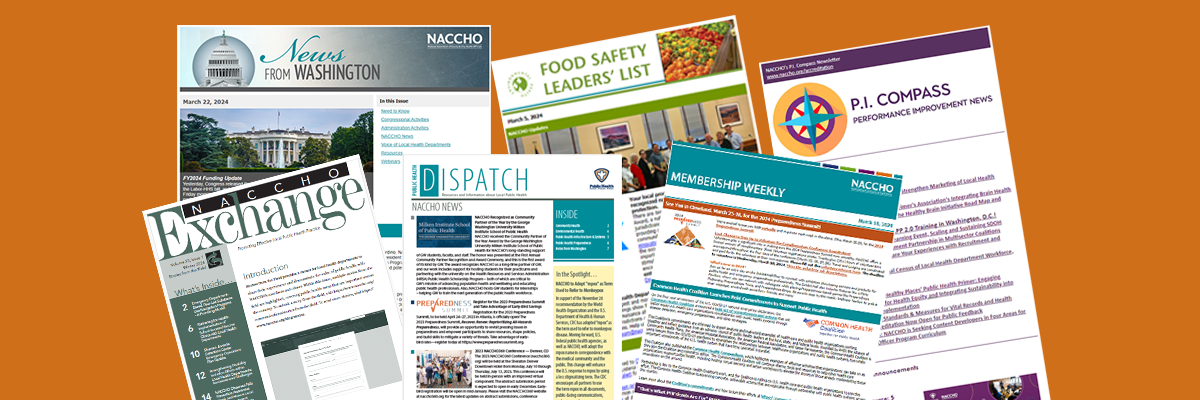
The following activities are associated with the Adolescent HIV Prevention Project. Sharing, Supporting, and Disseminating Best Practices Since 2004, NACCHO has funded and provided technical assistance to LHD demonstration sites to enhance adolescent HIV, STI, and unintended pregnancy prevention in their jurisdictions and share related lessons learned and products with other LHDs. Information about current and former demonstration sites, including tools, resources, and lessons learned, is available on the HIV/STI demonstration sites Web page. In 2007, NACCHO began providing opportunities for HIV/STI prevention peer technical assistance. NACCHO has supported seven peer technical assistance conference calls and in-person visits to allow LHDs that have expertise in a particular area of adolescent HIV/STI prevention to share it directly with other LHD staff. NACCHO will continue to broaden its network of peer technical assistance providers and support future conference calls and in-person visits. NACCHO's "Share What Works" Model and Promising Practices database is a searchable online tool that features peer-reviewed and -evaluated practices on public health issues. Included in the database and in each year's solicitation and peer review process are practices addressing adolescent HIV, STI, and/or teen pregnancy prevention. NACCHO is also developing a compendium of programs, featuring strategies undertaken by LHDs to address adolescent HIV, STI, and teen pregnancy prevention. The compendium will feature several programs that emphasize collaboration with schools and other community partners. In 2007, NACCHO began a webcast series to assist LHDs and their partners by sharing LHD challenges and successes in adolescent HIV, STI, and teen pregnancy prevention. More information about upcoming and archived HIV/STI Prevention series webcasts is available here. Sharing Resources NACCHO's Toolbox is composed of timely, relevant, and locally adaptable electronic tools, resources, and materials. The Toolbox includes an HIV/STI prevention section. Please consider whether you have tools that might be useful to LHDs and submit them via the "submit a tool" feature on the Toolbox. By request, NACCHO can track the number of downloads of resources posted in the Toolbox. NACCHO also produces a bimonthly, state-by-state, searchable foundation funding guide for various community health topics. Past guides on HIV prevention, teen pregnancy, and adolescent health are archived on our Web site. This summer, we will produce a state-by-state foundation funding guide for positive youth development. Disseminating Information NACCHO disseminates information to LHDs through a variety of communication venues: Public Health Dispatch (a monthly newsletter of resources relevant to LHDs); NACCHO Exchange, a quarterly theme-based publication; an HIV/STI e-mail distribution list, with more than 500 LHD subscribers, the Adolescent Health e-mail distribution list, with more than 1,110 LHD subscribers; and our Web site at www.naccho.org. To view previous issues of the HIV/STI distribution list or to sign up to have timely HIV/STI-related information delivered to your inbox every Friday, click here. Identifying, Creating, and Expanding Opportunities for Collaboration NACCHO will participate in coalitions and initiatives and collaborate with the CDC and other relevant federal, national, state, and local organizations to ensure LHDs' involvement in key policy development and activities. Throughout these activities, NACCHO will gather the reactions and recommendations of local health officials and other LHD representatives to inform internal and external policymaking. In 2008–2009, NACCHO will be facilitating conference calls with pairs of DASH-funded local education agencies (LEAs) and their associated LHDs to identify common objectives and associated opportunities for enhancing collaboration and avoiding duplication of efforts. Looking Upstream NACCHO is continually exploring ways to incorporate health equity through social justice into our work and into that of LHDs. See the "Tackling Health Inequities Handbook" for examples of related LHD initiatives. Centers for Disease Control and Prevention (CDC). HIV/AIDS Surveillance Report 2002; 14(1):1-40.Accessed 9/04 at http://www.niaid.nih.gov/factsheets/aidsstat.htm. |