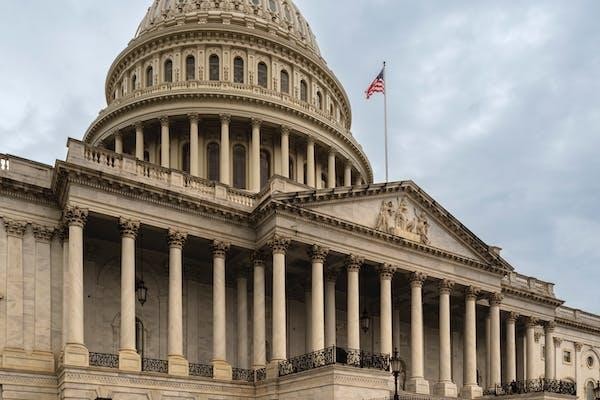
HHS Secretary Robert F. Kennedy Jr. Testifies before the House and Senate on FY26 Budget and Department Overhaul
May 16, 2025 | Lauren Soule
This page requires a membership login. Log in or create an account by clicking the link below.
MyNACCHO LoginOn May 14, 2025, Robert F. Kennedy Jr., Secretary of Health and Human Services (HHS), appeared before the House Appropriations Subcommittee on Labor, Health and Human Services, Education, and Related Agencies; and the Senate Health, Education, Labor and Pensions (HELP) Committee. This is the first time the Secretary has testified on Capitol Hill since his Senate confirmation. During both back-to-back hearings, Secretary Kennedy defended plans to cut the HHS budget by over $30 billion as proposed in the FY26 budget request and said the department plans to reduce its staff to pre-Covid levels.
The White House released a condensed version of the president’s budget request earlier this month, which is commonly referred to as a “skinny budget.” The budget overview does not include many details, but it proposes a request for $93.8 billion for HHS, which would be a 26.2% decrease from FY25 enacted levels. The skinny budget proposes significant cuts to federal agencies including:
$5.6 billion in discretionary funding for Centers for Disease Control and Prevention (CDC), a 38.9% decrease from FY25;
$29.3 billion for NIH, a 38% decrease from FY25;
$7.2 billion for “priority activities that were formerly part of” the Health Resources and Services Administration (HRSA), a 19.4% decrease from FY25;
$6.2 billion for “activities that were formerly part of” the Substance Abuse and Mental Health Services Administration (SAMHSA), a 14.3% decrease from FY25.
As part of the federal funding process, Cabinet members like Secretary Kennedy are asked to appear before Congress to justify the administration’s budget proposals. These hearings are an important part of the appropriations process, where Congress reviews and approves federal spending. Under the banner of “Make America Healthy Again” (MAHA), Secretary Kennedy said the budget request prioritizes combating chronic disease, addressing nutrition, food safety, and environmental health, and reorganizing HHS to streamline operations. Secretary Kennedy outlined that the budget restructures the National Institutes of Health (NIH) to focus on “essential” biomedical research and “restore public trust,” eliminating support for research and programs the administration has identified as tied to diversity, equity, and inclusion (DEI) and gender identity.
Secretary Kennedy mentioned the creation of a new entity, the “Administration for a Healthy America” (AHA). In response to questions from Senator Susan Collins (R-ME) who asked how CDC can continue to implement a national public health infrastructure on dementia when the program staff had been let go or put on administrative leave, the Secretary noted that function would be folded into a new AHA but could not say more during the hearing due to a recently issued temporary restraining order. He said the goal of AHA is to centralize public health, food and drug regulation, and disease prevention, but did not lay out specific implementation plans. Throughout questioning from lawmakers, Secretary Kennedy maintained support for Medicare, Medicaid, Head Start, and the Indian Health Service.
Secretary Kennedy received some praise from Republicans for the actions of HHS so far. But several Republicans voiced concerns about aspects of the administration’s policies that they feared could harm businesses, agriculture in their districts, or children’s health. During the House Appropriations hearing, Representative Mike Simpson (R-ID), a former dentist with over 20 years of experience, specifically cautioned against Kennedy’s proposal to eliminate fluoride from drinking water, arguing it could lead to dental health problems.
Democrats on the House Appropriations Committee repeatedly pressed Secretary Kennedy about the magnitude of cuts proposed for FY26 and asked him to promise to spend the money Congress gives him in FY26, which he committed to do. But he repeatedly justified both the proposed cuts in the FY26 request and the reductions in spending in FY25, asserting that the nation’s debt is a public health issue. The Secretary deflected questions about the delays in FY25 federal spending, which in some instances has been halted by the recent reduction in force efforts.
Senator Bill Cassidy (R-LA), Chair of the Senate HELP Committee, asked Secretary Kennedy about the elimination of several large grants for hospitals and health departments for emergency preparedness. This appears to be a reference to the Hospital Preparedness Program at ASPR and Public Health Preparedness and Response Program at the CDC, both of which are cut in the “skinny” budget request. Senator Cassidy emphasized the work of local public health stating that frontline public health happens at the local level. He mentioned that under-resourced states and rural areas rely on federal funding to support public health. Perhaps most notably, Senator Cassidy asked about how to return power to the states while ensuring that funding is available to address preparedness and other public health needs. Secretary Kennedy said that CDC has a legal obligation to national pandemic response and promised to make improvements. He also encouraged renewal of the Pandemic and All-Hazards Preparedness Act (PAHPA).
Secretary Kennedy’s testimony provided some insight into the administration’s priorities for restructuring HHS and reducing federal spending, while emphasizing the administration’s continued support for programs like Medicare and Medicaid. Lawmakers from both parties raised questions and concerns, particularly around funding cuts and public health preparedness and these hearings highlighted some of the debates likely to shape the FY26 appropriations process. We will learn more about the administration’s specific programmatic priorities when the full President’s Budget Request is released in the coming weeks. NACCHO will provide a comprehensive analysis of the President’s Budget Request once it is published and will continue to advocate for robust funding for public health programs in FY26.
Update: Secretary Kennedy Testifies before the Senate Appropriations Subcommittee on Labor, Health and Human Services, Education, and Related Agencies
On May 20, Secretary Kennedy testified before the Senate Appropriations Subcommittee on Labor, Health and Human Services, Education, and Related Agencies. During the hearing, there was bipartisan concern about the proposed 26% cut to HHS’s topline funding amount compared to FY25 levels. The importance of rural health and funding to address the opioid crisis were mentioned numerous times by senators in both parties.
In her opening remarks, Subcommittee Chair Shelley Moore Capito (R-WV) praised HHS for its recent efforts to improve the public’s health and eliminate waste, but she raised concerns about the proposed topline 26% funding cut and requested a careful review of all programs. Chair Capito stressed the importance of biomedical research saying it not only saves lives but also strengthens the U.S. economy. She also highlighted the value of SAMHSA funding in addressing the opioid crisis in West Virginia, and encouraged Secretary Kennedy to prioritize rural healthcare improvements. Chair Capito voiced support for HRSA’s workforce programs and expressed interest in learning more about the proposed reorganization of HRSA into AHA.
In her opening remarks, Ranking Member Tammy Baldwin (D-WI) said Secretary Kennedy failed to uphold previous promises of transparency noting that Congress has not received clear information on how FY25 funds are being spent in light of recent reduction in force efforts. She expressed alarm over a broader departmental overhaul, including office closures and staff firings that have halted or effectively eliminated important programs like CDC’s Childhood Lead Poisoning Prevention Program and Safe to Sleep. Ranking Member Baldwin warned that the proposed $18 billion cut to NIH and drastic CDC funding reductions would undermine U.S. medical research, cede ground to China, and harm public health.
Both Ranking Member Baldwin and Senator Patty Murray (D-WA) suggested that HHS may be impounding billions in FY25 funding. Senator Murray went on to clarify that by making drastic staffing cuts HHS is already implementing proposed FY26 cuts on FY25 funds before Congress has approved an FY26 appropriations bill, particularly in biomedical research, public health, and early childhood programs. Secretary Kennedy cited a temporary restraining order (TRO) limiting what he could say about the reorganization.
Notably, Senator Jerry Moran (R-KS) asked about the measles crisis and Secretary Kennedy urged people to get MMR vaccines, saying it’s the best way to prevent infection.
While Secretary Kennedy defended the administration’s actions as efforts to reduce waste and streamline programs, a bipartisan group of senators questioned whether critical public health initiatives—especially those related to biomedical research, rural health, and chronic disease prevention—are being dismantled without Congressional approval. As the FY26 budget process moves forward, senators signaled that they would continue to request information from HHS on a bipartisan basis and that the Republican-led committee will provide oversight to ensure that essential services and research efforts are not compromised.
Related Posts
More NACCHO Blogs
Check out all the NACCHO blogs.