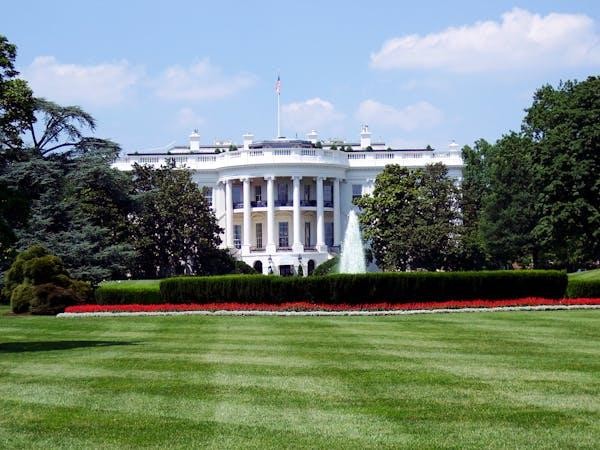
On May 2, 2025, the White House released a “skinny” version of the President’s Budget Request to Congress, providing limited details of their overall funding preferences for Fiscal Year 2026 (FY26). Typically released each spring, the President’s Budget Request is a detailed proposal from the Office of Management and Budget (OMB) that outlines the administration’s funding and policy priorities for the upcoming fiscal year. While it signals the President’s goals to Congress and can influence the appropriations process, it is not legally binding and does not itself enact any funding.
In some years, the President issues a “skinny budget” either instead of, or in addition to, the full President’s Budget Request. This streamlined version of the budget request outlines high-level priorities without the extensive detail normally found in the full proposal, which spans hundreds of pages and includes exact figures, long-term forecasts, and detailed funding justifications for each agency. Skinny budgets are most commonly released during a president’s first year in office, when the short window between inauguration in January and the early February budget deadline makes producing a comprehensive plan difficult. In these cases, the skinny budget serves as an initial outline while the full proposal is developed.
The skinny budget overview does not include many details, but it signals the Administration’s goal to reduce federal funding from a host of health-related agencies. Overall, the skinny budget requests $93.8 billion for the Department of Health and Human Services (HHS), which would be a 26.2% decrease from FY25 enacted levels.
The budget proposes significant cuts to the overall budgets for specific federal health agencies.
CDC
The budget requests $5.6 billion in discretionary funding for Centers for Disease Control and Prevention (CDC), a 38.9% decrease from FY25. It describes the goal of refocusing “CDC’s mission on core activities such as emerging and infectious disease surveillance, outbreak investigations, and maintaining the Nation’s public health infrastructure, while streamlining programs and eliminating waste.”
Notably, language included in the skinny budget proposes eliminating the following specific or centers at CDC, calling them “unnecessary:”
National Center for Chronic Disease Prevention and Health Promotion;
National Center for Environmental Health;
National Center for Injury Prevention and Control;
The Global Health Center;
Public Health Preparedness and Response, “which can be conducted more effectively by States;”
Preventive Health and Human Services Block Grant, “the purposes for which can be best funded by States.”
The skinny budget describes what appears to be a future block grant by “consolidating funding for Infectious Disease and Opioids, Viral Hepatitis, Sexually Transmitted Infections, and Tuberculosis programs into one grant program funded at $300 million.”
ASPR
The skinny budget does not provide any funding details for the Administration for Strategic Preparedness and Response (ASPR), but it notes that ASPR funding would decrease by $240 million from FY25, and the Hospital Preparedness Program (HPP) would be eliminated.
HRSA
The budget requests $7.2 billion for “priority activities that were formerly part of” Health Resources and Services Administration (HRSA), a 19.4% decrease from FY25.
The skinny budget also proposes consolidating programs at HRSA stating:
“The Budget consolidates a variety of programs that were formerly part of HRSA, including the Ryan White HIV/AIDS program activities that do not focus on core healthcare and support services directly to patients, such as: education and training (-$74 million); multiple Maternal and Child Health programs (-$274 million), which are duplicative of other Federal programs or could be addressed through block grant funding; multiple Health Workforce Programs (-$1 billion) which provide scholarships and support for individuals to enter high-paying medical careers; and family planning programs (-$286 million), which use taxpayers funds to nonprofits that are not aligned with several Administration policies.”
SAMHSA
The budget requests $6.2 billion for “activities that were formerly part of” the Substance Abuse and Mental Health Services Administration (SAMHSA), a 14.3% decrease from FY25.
Specific to SAMHSA, the skinny budget proposes eliminating the following programs, stating that they are duplicative or too small to have an impact due to low levels of funding:
Mental Health Programs of Regional and National Significance;
Substance Use Prevention Programs of Regional and National Significance;
Substance Use Treatment Programs of Regional and National Significance.
Other Programs
The budget requests $29.3 billion for National Institutes of Health (NIH), a 38% decrease from FY25.
The budget proposes $500 million for a Make America Healthy Again (MAHA) commission to provide “resources to HHS that would allow the Secretary to tackle issues related to nutrition, physical activity, healthy lifestyles, over-reliance on medication and treatments, the effects of new technological habits, environmental impacts and food and drug quality and safety.”
In addition to the skinny budget, the administration published a document on “revitalizing federalism” which provides a summary of the administration’s goal to reset “the proper balance between Federal and State responsibilities.”
Next Steps
A complete budget request with additional details on specific programs and congressional justification is expected to be released. NACCHO Government Affairs will provide an analysis of the complete budget request when it becomes available to the public.
Ultimately, final FY26 funding levels will be determined by Congress. NACCHO will continue to advocate for robust federal funding levels to support local health departments and public health programs. To learn more about why local public health is a sound investment for federal policy makers, see our updated fact sheet here.