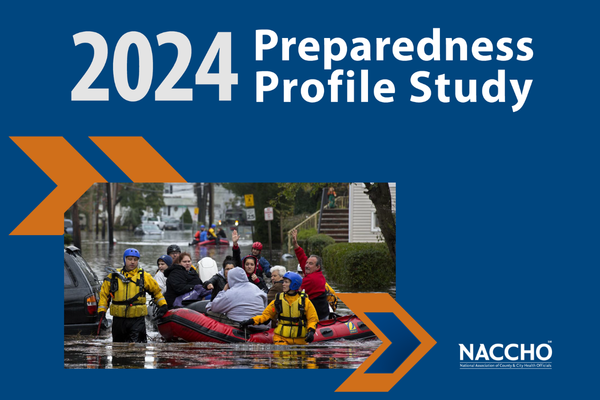
Washington, DC, June 25, 2026 - The National Association of County and City Health Officials (NACCHO), the voice of over 3,300 local health departments across the country, has released new data on the nation’s local public health preparedness and response capacity. The 2024 Preparedness Profile Study report is a nationally representative assessment of local public health preparedness capacity, workforce, partnerships, planning, and response activities. The report finds that local health departments continue to build and sustain infectious disease preparedness; identify key workforce training needs; and persist in demonstrating strong preparedness capacity, particularly through partnerships. At the same time, local health department officials are operating in a changing environment marked by workforce turnover, evolving priorities, and varying levels of readiness across public health threats that can put a strain on existing resources.
Key findings include:
Preparedness Planning Capacity: Local health departments continue to demonstrate strong preparedness for infectious disease threats. This is while adapting to a shifting risk environment characterized by preparedness gaps across several emerging threats, concern about weather-related hazards, and growing involvement in threat monitoring activities.
- More than half of local health departments reported being completely prepared to respond to small-scale infectious disease outbreaks (59%), pandemics (57%), and vaccine-preventable diseases (53%).
- Preparedness gaps remain for opioid use, cyber and infrastructure risks, active shooter incidents, and weather-related threats—where the proportion of agencies very concerned exceeds the proportion completely prepared.
- Many local health departments reported being very concerned about weather-related threats. Seventy percent of respondents reported being very concerned about storms and flooding, 65% are very concerned about winter storms, and 59% are very concerned about extreme temperature events.
- From 2022 to 2024, more local health departments reported increased participation in planning for chemical, biological, radiological, and nuclear activities (16% to 26%) and the health impacts of extreme weather events (13% to 32%).
Preparedness Workforce Capacity: Local health departments continue to strengthen preparedness capacity through workforce development and training as they navigate leadership transitions. These findings underscore the importance of sustained investment in professional development to support the next generation of preparedness leaders.
- Half of local health departments’ preparedness coordinators had fewer than six years of experience — the highest proportion since 2015. In addition, 30% were fully dedicated to preparedness duties, compared to 35% in 2015.
- The most commonly identified training priorities for preparedness coordinators were all-hazards planning (57%), exercise planning (56%), and strategic planning (51%).
- Approximately four in five local health departments reported non-preparedness staff participated in preparedness training (80%) and drills or exercises (81%) during the past year. This is an important marker of broader readiness across divisions of health departments.
Partnerships and Collaborations: Local health departments continue to collaborate with emergency response, healthcare, and community partners to help coordinate resources, share expertise, and strengthen preparedness efforts. In addition, volunteer organizations continue to serve as valuable partners, supplementing capacity before, during, and after public health emergencies.
- More than 85% of local health departments reported strong partnerships with key response partners, including infectious disease organizations (95%), local emergency management (89%), state public health agencies (88%), environmental health organizations (86%), and local public safety (85%).
- More than 60% of local health departments reported working with Medical Reserve Corps (MRC) units, Community Emergency Response Teams (CERT), or the American Red Cross to support planning, outreach, exercises, or response operations. The MRC was the most commonly engaged formal volunteer program.
- While many local health departments reported engaging MRC units in preparedness activities, 47% reported sponsoring a unit—with sponsorship more common among medium and large agencies than small agencies.
About the Preparedness Profile Study
Since 2015, NACCHO has conducted the Preparedness Profile Study to better understand local health department preparedness capacity, emerging issues, and evolving priorities across the United States. For the 2024 study, a stratified random sample of 1,200 local health departments was invited to participate. Responses from 486 local health departments were included in the analysis, resulting in a 41% response rate. Statistics are weighted to produce nationally representative estimates. Explore this and past reports at www.naccho.org/prepprofile.
About NACCHO
The National Association of County and City Health Officials (NACCHO) represents the over 3,300 local governmental health departments across the country. These city, county, metropolitan, district, and tribal departments work every day to protect and promote health and well-being for all people in their communities. For more information, visit www.naccho.org.