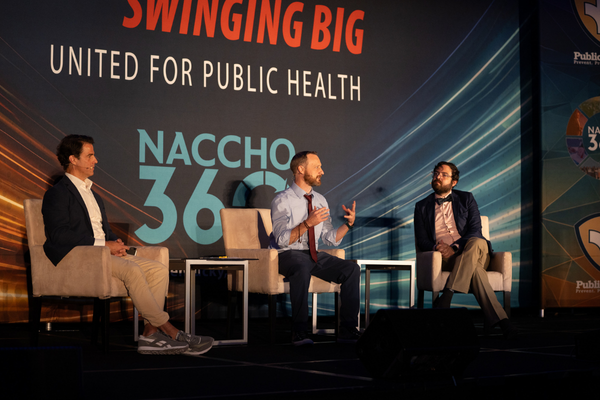
On Tuesday, July 14, NACCHO welcomed over 2,300 attendees in Louisville and online for the 2026 NACCHO360 conference. Public health leaders from across the country gathered under the theme, “Racing Forward, Swinging Big: United for Public Health’s Future.”
The conference opened with welcome messages from Louisville Mayor Craig Greenberg and Kentucky Governor Andy Beshear.
In her opening remarks, NACCHO CEO Lori Tremmel Freeman called on those attending “to stay focused, swing with purpose, and race toward a future built on innovation, resilience, and access for all” while exploring creative solutions to our most-pressing public health issues.
Patrick McGough, DNP, President of NACCHO’s Board of Directors and Chief Executive Officer and Chief Public Health Officer of the Oklahoma City and Oklahoma County Health Department, highlighted the importance of gatherings like NACCHO360, noting that “one of the greatest strengths of local public health is our ability to learn from each other, support one another, and move forward together.”
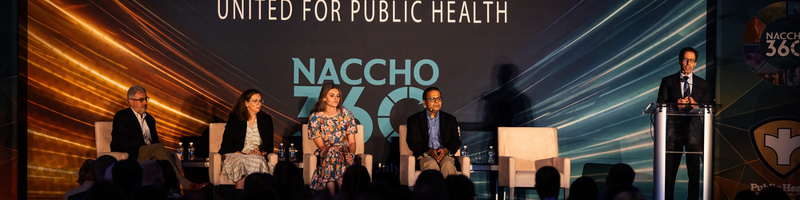
Opening Plenary Session
The conference’s first plenary session opened with Jennifer A. Shuford, MD, MPH, Deputy Director and Chief Medical Officer of the Centers for Disease Control and Prevention (CDC). With work experiences grounded in state public health, Dr. Shuford expressed appreciation for joining CDC in her role at this special time and highlighted that public health is strongest when there is “strong local public health.” She noted the critical role local health departments play, the value of partnerships, the need to invest in the public health workforce, and the need to be more effective in communications.
“It’s a privilege to join leaders on the front lines protecting the health of their communities,” said Shuford. “You’re the first to identify emerging threats and the first to respond when communities need help. You connect to local realities and build trust.”
During a fireside chat with Freeman, Shuford highlighted that strengthening bidirectional communication is essential to knowing and serving communities to the best of our abilities. She acknowledged the difficulty of leading and living through uncertainty and encouraged leaders to show up daily as their genuine selves.
“You will not always have all the information,” said Shuford. “What you can do is figure out what the best next step is and take it.”
Following this dialogue, AAron Davis, Director, Center for Public Health Initiatives at the Community Engagement Institute at Wichita State University, set the stage for a conversation around AI for local public health. He talked about the adoption of AI in comparison to how the internet changed the way we share information. Davis noted that AI is not just an application, “it will change how we think.” He encouraged attendees to take advantage of the conference’s AI track and to get creative when it comes to AI use cases.
Jefferson McMillan-Wilhoit, Chief Executive Officer at Flourish and Thrive Labs, expressed a need to get AI in the workflows with staff to make AI more useful. While AI is not a panacea, what excites him most about AI is that it will allow small local health departments to do things that would have never been thought possible. “AI should be used for things you don’t need your head for and you don’t need your heart for,” said McMillan-Wilhoit. He encouraged attendees to figure out the activities you actually need to do, incorporate AI into creative new steps to take and to help to solve problems, and put good AI guardrails in place.
Will Snyder, Co-Founder and Chief Executive Officer of Metopio, compared AI to a ramp taking you to different levels and also to the brake pads of a car noting that, “AI is part of the whole picture, but it’s not the only thing.” Snyder also discussed the innovation AI may bring to rural and small local health departments and encouraged attendees to start with the question, “what report do you hate doing,” using their expertise to see how AI can accelerate that.
Additional Highlights from Day One
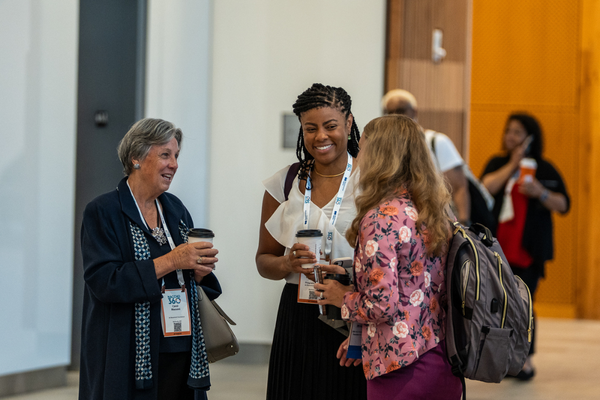
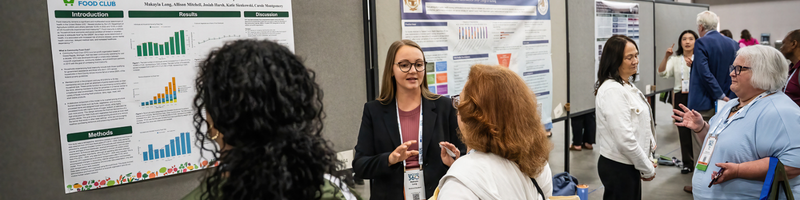
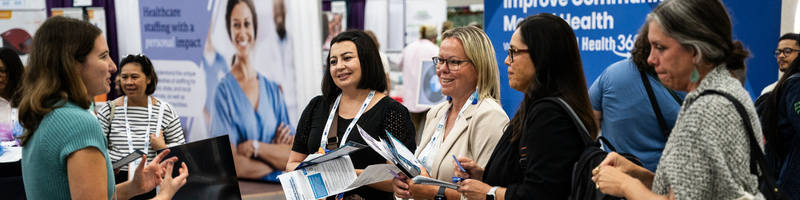
In addition to the keynote session, day one of NACCHO360 included over 50 education sessions. The Exhibit Hall also opened, providing participants with the opportunity to network with colleagues and connect with over 100 exhibitors showcasing services and products for public health professionals.