Authors: Clay County Public Health Center’s Corrie Courtney, MPH, BSN, RN Program Manager of Immunizations, and Jason Stalling, DHSc, Chief of Community Health Promotion
In June 2023, Clay County Public Health Center (CCPHC) became the first local public health agency in the greater Kansas City region to earn Sensory Inclusive® Certification. As a public health agency, staff recognized that many community members live with invisible disabilities and experience clinical settings differently. Upon partnering with the nonprofit organization KultureCity, the health department developed a plan to make services more accessible for clients with sensory processing needs.
KultureCity provides staff training, sensory tools, hosts a clinic experience social story on its website, and includes the health center on a map of certified locations. Before certification, staff had limited resources to support sensory needs during client visits. Through KultureCity’s training, staff gained a shared understanding of practical strategies for responding to client needs. Certification also increased awareness of sensory processing needs, which are often difficult for others to recognize and are not routinely addressed with clients. By making sensory inclusion a foundational part of the agency’s approach, clients are supported through practical solutions.
The Challenges of Traditional Clinics
Medical clinic environments typically include triggers for people with sensory needs or invisible disabilities. They can have bright lights, odors, noise, crowded waiting areas, rapid questioning, unfamiliar faces, transitions between spaces, unexpected touch, and fear of needles, all of which can increase stress during visits. When a client becomes overwhelmed, communication declines, questions may become difficult to answer, instructions are harder to follow, and care may be impacted. Symptoms from an overwhelmed client may be interpreted as oppositional or noncooperative. Recognizing sensory triggers through a predictable framework increases consistent, individualized care.
Implementation and Practice
From a patient’s perspective, a sensory-inclusive clinic experience at CCPHC results in a calm, supportive, and individualized visit from beginning to end. Prior to their visit, clients and caregivers may choose to review the clinic’s social story on the KultureCity website so they can start the experience feeling confident and prepared. Throughout the appointment, staff work to understand each client’s needs and reduce unnecessary sensory input whenever possible.
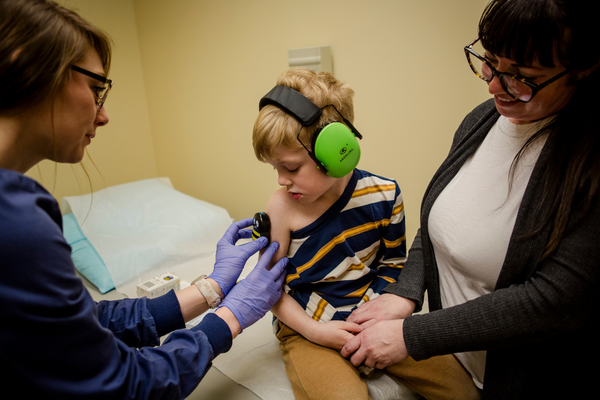
This may include creating a quiet environment, using softer communication, explaining each step before it happens, asking permission before physical contact, avoiding sudden touch or movements, allowing extra time, offering sensory tools such as fidgets or headphones, or giving the patient the option to wait in a less stimulating space when appropriate. Rather than using a one-size-fits-all approach, staff apply tools that reduce stress and support efficient care.
The Partnership: KultureCity Training and Certification
To support consistent sensory-inclusive care, Clay County Public Health Center requires all new hires to complete medical-focused KultureCity training during onboarding, along with an annual refresher. The training includes recognizing what sensory overload looks like in a clinical setting, how to reduce escalation, creating predictable encounters, and adjusting the environment to reduce stimuli. This approach helps ensure consistent care across all staff interactions.
What It Looks Like in Practice
Being sensory-inclusive is not just about tools; it requires awareness, flexibility, and communication. Recognizing distress and using consistent yet personalized strategies help limit stimuli and create a calming environment. For offsite clinics, collaboration with school professionals and caregivers provides additional support.
Impact on Clients, Families, and Staff
Since these changes were implemented, visits for individuals with sensory needs have shown improvement. One nurse recalls a parent saying that she brought her son to CCPHC because no one else would see him due to his severe autism, and CCPHC was the only place willing to work with him and accommodate his needs. Families report appreciation for the sensory bags and for the health center’s ability to provide services when other providers cannot accommodate their needs. Being a sensory-friendly clinic lets clients know that we see them, we care, and we want them to have a positive experience at the health center.
Guide for Other Providers
For local health departments looking to create sensory-inclusive services, staff buy-in is an important first step. Staff can then work to make sensory-inclusive practices part of the daily routine and clinic culture, including identifying quiet spaces, increasing awareness, and helping staff feel comfortable using sensory tools consistently. Caregivers, school staff, coworkers, and others familiar with the client can offer valuable insight into what may decrease distress for that individual.
Looking ahead, Clay County Public Health Center plans to continue its partnership with KultureCity, maintain annual staff training, and strengthen policies that reduce sensory stimuli, such as lighting and fragrance. The goal is for sensory-inclusive care to become embedded in everyday clinic culture as a routine and automatic part of service delivery. Long-term success means CCPHC is recognized by the community as a place where clients with sensory needs feel supported, understood, and able to complete their visits safely. As awareness grows and staff continue using these resources consistently, small adjustments can reduce distress, increase trust, and create a more positive experience for clients, families, and staff.
Photo by Krier Photo, courtesy of Clay County Public Health Center.