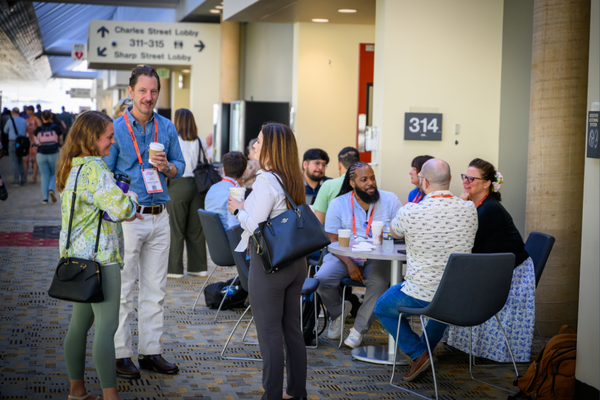
The final day of the 2026 Preparedness Summit kicked off with presenters leading learning sessions and workshops. The conference concluded with the plenary discussion, “At the Ready: Stockpiling in Your State.”
Steven Adams, Deputy Assistant Secretary of the Center for the Strategic National Stockpile at the HHS Administration for Strategic Preparedness and Response, opened the conversation by acknowledging the work done by those attending the conference, remarking that “you are the backbone of the nation’s public health response.” He highlighted that the session’s focus on jurisdictional stockpiling is both timely and essential and that our strengths lie in optimizing a formulary that is suited to local requirements and needs. Adams raised the point that stockpiling isn’t just about what is on the shelf, it’s about having actionable exercise plans, realistic distribution strategies, workforce readiness, training, and strong partnerships.
To open the plenary discussion, moderator Scott Wollek, Director of the Hospital Preparedness Program at the Maryland Hospital Association and adjunct professor at George Mason University, noted that stockpiling at the national level is not a new concept but one that has shifted overtime. The stockpile’s focus has evolved from an initial focus on terrorism, to an all-hazards approach, to one that has addressed various flu strains and the Ebola virus disease, and most recently responded to COVID-19. “We are now trying to figure out again what needs to be stockpiled, at what quantities, by whom, at in what manner,” said Wollek.
Tim Wiedrich, Director of Health Response and Licensure Section at the North Dakota Department of Health, then took the audience through a virtual tour of the model being used in North Dakota to stockpile. Over 20 years the state has created a public-private partnership that has built a stockpile now valued at about $32 million with about 900 discrete items in the cache and a wide range of assets. These include durable medical equipment, medical surge beds and portable procedure beds, disposable medical supplies, and transportation assets like vehicles and trailers. Wiedrich emphasized that an emergency declaration is not needed to access the cache and that it is now perceived as a value add by stakeholders due to its utility and collaborative approach.
Tim Rubert, Vice President Government Affairs at Bound Tree Medical, introduced a complimentary solution for managing medical stockpile, showcasing an example of a distributor-based model that has been used by first responders, fire, and EMS. In this model, the distributor manages the stockpile, including inventory rotation and replacement and can sell items as they get close to their expiration date. He noted that this model reduces expiration waste and heightens readiness while allowing access to extensively vetted products and manufacturers.
As the conversation continued, Juli Sickler, Emergency Preparedness and Response Director at the North Dakota Department of Health, noted that decisions on what to include in the stockpile are based on past events and what is needed by local jurisdictions. This locally based ownership and buy-in includes staff trained to order from and use the materials in the cache. “We’re creating value,” said Sickler. “We’re not just there for emergencies and big events; we’re there every day.”
Zachery Bruns, Emergency Preparedness and Response Regional Coordinator for the First District Health Unit in Minot, ND, spoke to the role of the stockpile in his position as a local team member supporting a region of seven counties. As the “initial boots on the ground,” Bruns sees the gaps communities experience and relays back to the stockpile’s operations center what is needed at the local level. He is also able to let those in his region know what resources are available and how to deploy them.
Additional information about North Dakota’s stockpiling approach is available in a recent article from the Association of State and Territorial Health Officials (ASTHO).
Laura Biesiadecki, Preparedness Summit Planning Committee Co-Chair and Senior Director of Preparedness at NACCHO, concluded the conference with an invitation to the 2027 Preparedness Summit in Atlanta, GA, in April 2027.