The plenary session on the third day of the 2026 Preparedness Summit opened with a fireside chat between Lori Freeman, CEO of NACCHO, and Dr. Joseph Kanter, CEO of the Association of State and Territorial Health Officials (ASTHO).
Freeman reinforced the field of preparedness as a team sport, feeling energized from seeing public health preparedness professionals come together to share their experiences at the Summit. “This says a lot about both the commitment of people who work in this space and the nature of the field itself,” she remarked.
Dr. Kanter called out that “the work you do saves lives” and commended the community’s willingness to spend time learning from challenges and gaps and sharing those lessons in forums like the Preparedness Summit. He also called on those in attendance to help shape the field’s public narrative by sharing the good work that attendees do in communities with their organizational leadership and associations like NACCHO and ASTHO.
Jonathan Yoder, Deputy Director of the Division of Infectious Disease Readiness and Innovation at the Centers for Disease Control and Prevention, reiterated that public health preparedness professionals really are the backbone of our nation’s preparedness and response system, emphasizing that CDC’s tools only succeed because of their expertise, data, commitment to collaboration, and how much this workforce cares for their community.
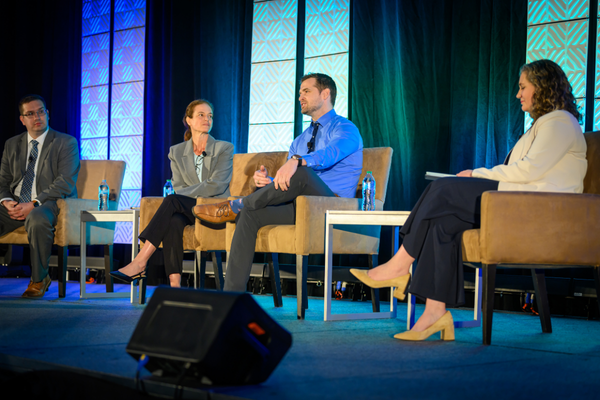
Following these opening remarks, the panel for “Staying Alert: New Models for State and Local Situational Awareness,” discussed new and emerging strategies related to health security and data sharing.
Session moderator Jennifer Nuzzo, Director of the Pandemic Center and Professor of Epidemiology at the Brown University School of Public Health, framed the conversation around situational awareness data, which may seem technical, as instead “foundational to everything we do.” She acknowledged the importance of seeing and responding quickly to emerging threats while doing the work against a backdrop of workforce shortages, burnout, and fragmented funding.
Tommy George, Public Health Epidemiology Supervisor at Nebraska’s Lincoln-Lancaster County Health Department, brought home the importance of open communication and transparency throughout the panel discussion, stating that even with all the latest data systems and information out there, if we are not talking to each other during an emergency event, we’re not going to get the full picture. Tommy advocated for wastewater monitoring as a non-invasive tool that looks at the community as a whole, helping counties and cities get ahead of the transmission cycle of an infectious disease agent and substance use disorders.
Rebecca Katz, Director and Professor at Georgetown University Center for Global Health Science & Security, introduced a new civil society effort in the works that will serve as a non-governmental health security operations center in time for the World Cup, potentially enabling faster decision-making and response actions.
Andrew Pickett, Director of the Bureau of Emergency Preparedness and Response at the Pennsylvania Department of Health, spoke to the value of collaboration between preparedness, data, and surveillance. He noted that using data to drive action doesn’t always necessarily mean response—it may mean collecting more specific and targeted data. He also called on attendees to build better relationships between preparedness and epidemiology staff.
Additional Highlights from Day Three
The day included demonstrations and learning sessions on a variety of topics. Over lunch in the Exhibit Hall, participants had the opportunity to learn from and interact with over 30 posters and their presenters.
Later in the afternoon, attendees convened in four Town Hall sessions exploring the topics of:
- ASPR Town Hall
- Public Health Readiness for Viral Hemorrhagic Fevers
- Strengthening Health Systems through Innovation, Engagement, and Leadership in Disasters (SHIELD) Initiative
- What Works and What We’re Learning: Network of Regional Centers for Public Health Preparedness and Response