Both times the Jefferson County Health Department in Missouri has completed the process to be recognized through the Project Public Health Ready (PPHR) program it has used the experience as a way to train a new preparedness staff member.
“When I started as the preparedness planner, going through the PPHR process helped me understand what public health preparedness really involves,” said Jeana Vidacak, Community Services Manager, who was the department’s new preparedness planner when they first received PPHR recognition in 2019.
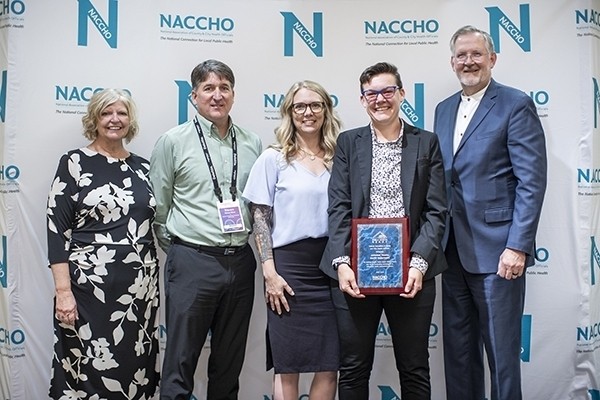
PPHR is a nationally recognized, criteria-based training and recognition program developed by NACCHO in partnership with the Centers for Disease Control and Prevention (CDC). It is designed to help local health departments (LHDs) develop core public health and emergency preparedness competencies. Health departments that successfully complete the program earn PPHR recognition, valid for five years. Re-recognition status, also valid for five years, demonstrates a department’s ongoing commitment to preparedness and highlights improvements made since an agency’s initial recognition.
In going through the process, the first time, the Jefferson County Health Department, which serves a rural community of about 250,000 residents and operates under a charter government with a separate board of trustees, switched to capability-based plans. These plans are often centered around PHEP Capability 3: Emergency Operations Coordination. Capability 4 (Emergency Public Information and Warning) is also often combined with Capability 6 (Information Sharing) to streamline activities.
“I was able to apply what I learned to our COVID-19 response by building support systems and organizing response teams,” said Vidacak.
As the department welcomed Anne-Marie Denny as its new preparedness planner in 2023, it seemed like “the perfect time” do pursue PPHR re-recognition, said Vidacak. “Revisiting all plans and having a hard deadline was beneficial. It’s easy to put things off. Every two weeks, we did a new plan.”
“You could see Anne-Marie become more confident,” said Jefferson County Health Department Executive Director Steve Sikes. “PPHR allowed her to take on being a writer and reviewer of plans. It helped her figure out the program.”
PPHR provides an organized structure that guides agencies through developing, reviewing, and exercising their public health emergency plans. By following the framework, teams are able to build stronger preparedness systems, identify areas for improvement, and ensure their plans are actionable in real-world situations.
“The PPHR process helped us structure how we respond,” said Vidacak.
This includes how the department carries out incident command, how it does forms, and how it uses technology.
“It has been integrated into our agency structure,” said Sikes. “It goes back to the PPHR review process and what we learned. This type of planning affects all staff and brings in the leadership team.”
Subject matter experts in the field serve as PPHR reviewers, assessing applications and offering feedback to applicants. The PPHR review process helps health departments critically assess their preparedness plans and identify gaps, ensuring they’re thorough and ready to be put into action.
The Jefferson County Health Department includes about 65 staff members including a preparedness planner and three staff in communicable disease (one epidemiologist and two communicable disease nurses). Undergoing the PPHR process helped the staff to understand how different departments are involved in preparedness.
“Anything we can do to pull staff in gives them more buy in,” said Vidacak. “This gives them a say in our success.”
To maintain its preparedness, the department practices and continually updates its plans, ensuring there is a documented process walking staff through the plan’s steps. This includes documenting partnerships. Denny brought to her role connections to external partners with a focus on access and functional needs. The PPHR process helped to solidify and document those partnerships, something Vidacak saw as an improvement from the department’s first time through the recognition process.
Health department activations both address community needs and support preparedness exercises. In 2024 and 2025, the department was activated in response to measles. In October of 2025, the department was activated at a low level as it prepared for drive-through flu clinics. Staff who didn’t regularly serve as leads ran the clinic.
“They’re learning and making changes; it’s a great way to practice and builds muscle memory,” said Vidacak.
“Our plans are integrated into more ways than we can image,” said Sikes. “This puts different people into leadership positions, getting them involved in the command structure and practicing following the plan.”
While the department has realized many benefits through the PPHR recognition process, Sikes noted that it was not an easy process.
“It takes time and effort,” said Sikes.” Some days were frustrating. However, the application encourages you to think and discuss things through. You need a team to do it right.” He also noted that “I don’t think we would be as successful without the process. It helped us establish a structure, teams, and support system of staff.”
“The payoff is that we use it more often than I realized,” said Vidacak. “We feel more prepared and have developed a plug and play system. We may not have thought so, but we use it all the time.”
Ready to demonstrate excellence in planning for, responding to, and recovering from public health emergencies? Celebrate your commitment to building stronger communities. Click here to learn more about PPHR, including details of the application process and ways to get involved in the program as a reviewer, state lead, or workgroup member. Interested in a one-on-one connection or staying in the loop about program updates? Click here.