Three years ago, the Clark County Medical Reserve Corps (MRC) in Ohio partnered with a local hospital to establish its Faith Community Health Ministries, with a goal of decreasing emergency room visits and re-hospitalizations. Through the initiative, the MRC works with local churches to identify members of their congregations who become trained medical and non-medical MRC volunteers. These MRC members then work with their respective churches to provide screenings and health education to parishioners.
“Health promotion is a part of the health department’s strategic plan,” said MRC Coordinator Sandy Miller. “This program promotes health and wellness, early identification and treatment, and prevents hospitalization and EMS calls.”
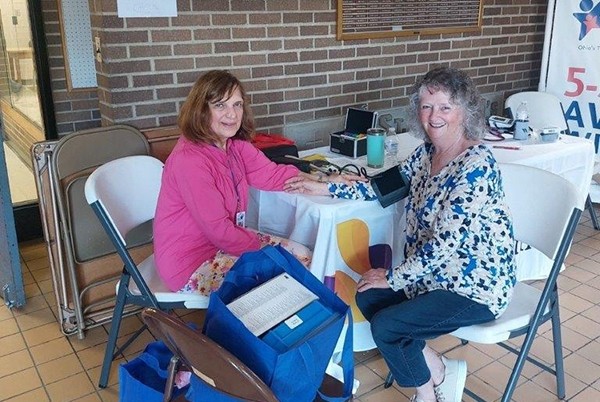
The program’s medical volunteers are nurses and the non-medical volunteers, called health ministers, are people within the church community without a medical license who want to help. Activities carried out by MRC volunteers include blood pressure and blood sugar screenings and health education. Volunteers also do home visits, visits to long-term care facilities, and provide medication education.
The program began with five churches, six nurses, and three health ministers. The program has added five churches each year and now includes 15 churches and 30 MRC volunteers. Community partners have expanded beyond the local hospital which initially provided funding to support the program.
Activities in the program’s second year included 46 educational workshops held for 10 churches, health screenings and education for 968 children and adults, and participation in eight community health fairs reaching over 1,000 attendees. The total economic impact exceeded $172,000.
To start a new partnership, each participating church signs an MOU with the MRC and the unit works with churches and pastors to identify nurses within the congregation. Interested nurses complete the unit’s regular volunteer training requirements and additional trainings, including an online course in Faith Community Nursing through West Virginia University.
Starter supplies and equipment provided for each church site include a first aid kit, AED and pads, glucometer and testing supplies, manual blood pressure cuffs, automatic blood pressure monitor, pulse oximeter, and a Chromebook for documentation.
“It’s important to have a good budget,” said Miller. “Make it clear to the church that they need to work toward sustainability.”
Outside of its Faith Community Health Ministries, the Clark County MRC’s more than 300 volunteers support activities like flu clinics as well as more specialized missions. During COVID-19 response, volunteers provided more than 80,000 hours of service.
For the past seven years, the unit’s suicide survivors team has provided family support and resources whenever a suicide happens in the community. Six years ago, the unit formed a crisis response team which provides crisis intervention in group settings for those exposed to traumatic events including fire department staff, those in the emergency system, and schools. In April of this year, the unit began supporting a refugee clinic.
“When I need them, they’re there,” said Miller. “The volunteers are amazing.”