Day Four Preparedness Summit Highlights: Long-Term Recovery
May 09, 2025 | Beth Hess
This page requires a membership login. Log in or create an account by clicking the link below.
MyNACCHO LoginThe final day of the 2025 Preparedness Summit kicked off with presenters leading nearly a dozen learning sessions, workshops, and demonstrations for the conference’s over 2,400 attendees.
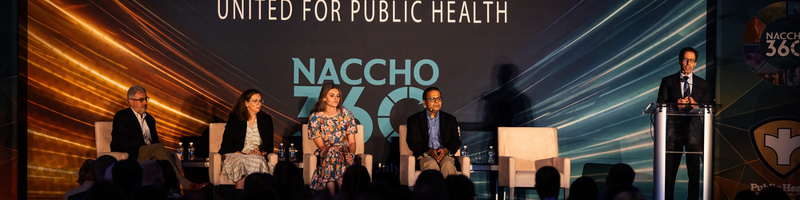
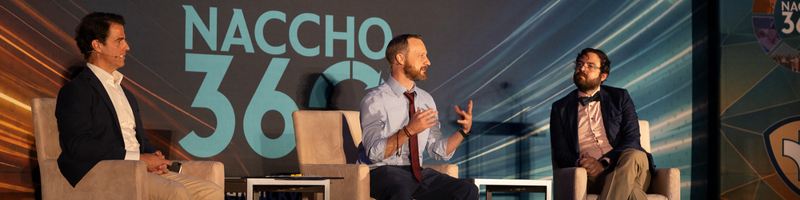
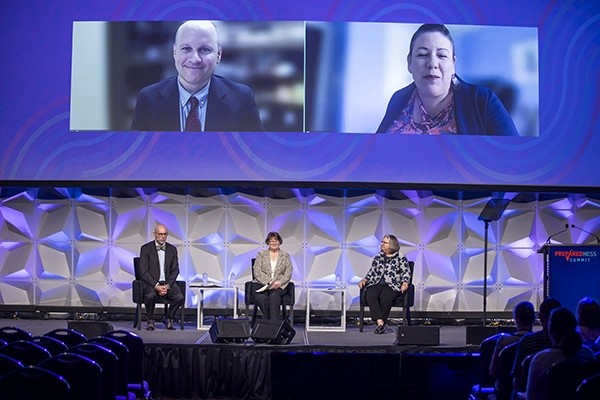
The conference concluded with the plenary discussion, “Bridging the Gap: Public Health’s Role in Long-Term Recovery.”
Dr. David Dyjack, Executive Director of the National Environmental Health Association, served as moderator for the conversation and opened the discussion by highlighting the need to focus on the “who” of recovery, noting that 41% of all Americans are impacted by disasters. He shared examples of his professional experience in response and recovery and posed the questions, “are we doing what we can to ensure our constituency are in a better place 10-15 years later? Are we a bridge to long-term recovery.”
Dr. Monica Schoch-Spana, Professor of Community Health and Director of the Community Health Degree Program at Texas A&M University - San Antonio, opened by sharing the results of the research that took a comprehensive, holistic look at recovery from the COVID-19 pandemic. This research explored the many aspects of individual and community life that were impacted by the pandemic and how holistic recovery can actually be implemented. Dr. Schoch-Spana pointed out that this research illustrates that recovery is an “iterative and messy process” and that it also offers practical advice about the “machine of recovery.”
Dr. Joie Acosta, Senior Behavioral/Social Scientist at RAND, echoed the sentiment that recovery is both complex and needs to be holistic. She emphasized the need to put people first by centering them in recovery. She noted that “what you measure matters” and that behavioral health is a pressing issue in recovery. Dr. Acosta highlighted some of the early as well as mid-term indicators that alert responders to behavioral health needs. She also shared highlights from a practical, online, and interactive toolkit for state, territorial, local, and tribal public health agencies that shows how existing data sources can be used for behavioral surveillance in the context of a variety of public health emergencies while long-term efforts to improve public health data infrastructure are underway.
Dr. Andrew Whelton, Professor of Civil and Construction Engineering and Environmental and Ecological Engineering at Purdue University, noted the need to bring resources to recovery to help communities both mentally and physically. He emphasized the need for connecting people with others, sharing the positive impact of connecting responders to the Maui wildfire to those whose communities were similarly impacted in other parts of the country. Dr. Whelton called on attendees to share publicly what they have done during and after responses. “No one can build on your experience if they don’t know what happened. Share openly and transparently…The more we help one another, the shorter recovery can be.”
Cheryl Petersen-Kroeber, Director of Emergency Preparedness and Response at the Minnesota Department of Health, talked about the need to have plans in writing, “not just in your head” and how tools like After Action Reports, improvement plans, and rural cafes have helped to create a culture of change within public health—“it’s why we respond better today than we did 20 years ago.” She highlighted how public health emergency preparedness has “leaned in” and been honest with partners, noting instances of innovation and creativity. “We really know our business. Don’t allow yourself to get paralyzed in process.”
Through the panel’s discussion, a few themes emerged:
- Funding challenges of long-term recovery: Dr. Schoch-Spana noted that regardless of funding, public health has the ability to collaborate and coordinate. She also highlighted a theme heard earlier in the conference: the need to make the invisible visible.
- Partnerships: Dr. Dyjack emphasized the need to motivate non-traditional partners to get involved, including doing the advocacy that government agencies may not be allowed to do. Dr. Acosta noted the value of asset mapping as a way to empower people to see their own role in recovery. She called out that “public health has to be really good at budgeting relationships. Engage with partners to spread and have a bigger impact without stretching yourselves too thin.” Dr. Whelton talked about opportunities for academia to embrace and incorporate into teaching opportunities for people to interact with partners.
- Trust building: Dr. Schoch-Spana noted that trust building and resilience strengthening are an ongoing activity and that our day-to-day job is to build and sustain relationships over time. Dr. Acosta highlighted that a major driver of trust is to show up consistently and that trust building happens both online and offline. Petersen-Kroeber called out that relationship building is what public health does best and that it is foundational to public health emergency response and recovery.
As the session concluded, Petersen-Kroeber implored those in attendance to “be kind to yourselves and each other. We will thrive through trying times.” Dr. Dyjack called out that “You are the steel and the bridge between chaos and recovery…We see your strength and resolve. You don’t stand alone. We thank you. Together we need to move onward.”
Resources from the conversation:
- Monitoring and Surveillance of Behavioral Health in the Context of Public Health Emergencies: A Toolkit for Public Health Officials from RAND
- Pandemic Recovery Metrics to Drive Equity (PanREMEDY): Guidelines for State and Local Leaders in Anticipation of Future Catastrophic Outbreaks from Johns Hopkins Center for Health Security
Laura Biesiadecki, Preparedness Summit Planning Committee Co-Chair and Senior Director of Preparedness at NACCHO, concluded the conference with an invitation to the 2026 Preparedness Summit in Baltimore, MD, April 13-16, 2026.
Click here to see additional photos from the day.