According to the Centers for Disease Control and Prevention (CDC), each year, nearly 31M people in the United States may be bitten by a tick. Tick bites can cause serious and sometimes deadly diseases. Lyme disease is the leading tickborne disease in the United States, with an estimated 476,000 patients treated for the disease each year. Of the 200 types of mosquitoes living in the U.S., about 12 spread diseases. West Nile virus is estimated to have caused nearly 7 million infections since its introduction to the United States, and more than 3.9 billion people around the world are at risk of getting dengue.
Health Departments, Use this Sample Public Health Prevention Message to Spread the Word
This summer, encourage your friends, loved ones, patients, members, constituents, and colleagues to protect themselves against vector-borne diseases-prevent tick and mosquito bites:
- Use EPA-registered insect repellent. Look for an EPA registration number (EPA Reg. No.) on the insect repellent product label. This registration number means the company provided EPA with technical information on the effectiveness of the product.
- Treat clothes and gear like hiking boots and tents with 0.5% permethrin spray.
- When possible, wear long-sleeved shirts and pants.
- Perform a thorough tick check when coming in from being outside and remove any attached ticks promptly. Do not wait to go to a healthcare provider to remove the tick.
- Control mosquitoes in and around your home.
- Check travel health notices for outbreaks, and prevent bites while traveling on your summer adventures.
Latest resources from CDC’s Division of Vector-Borne Diseases, including new and updated web content, guidance, and trainings.
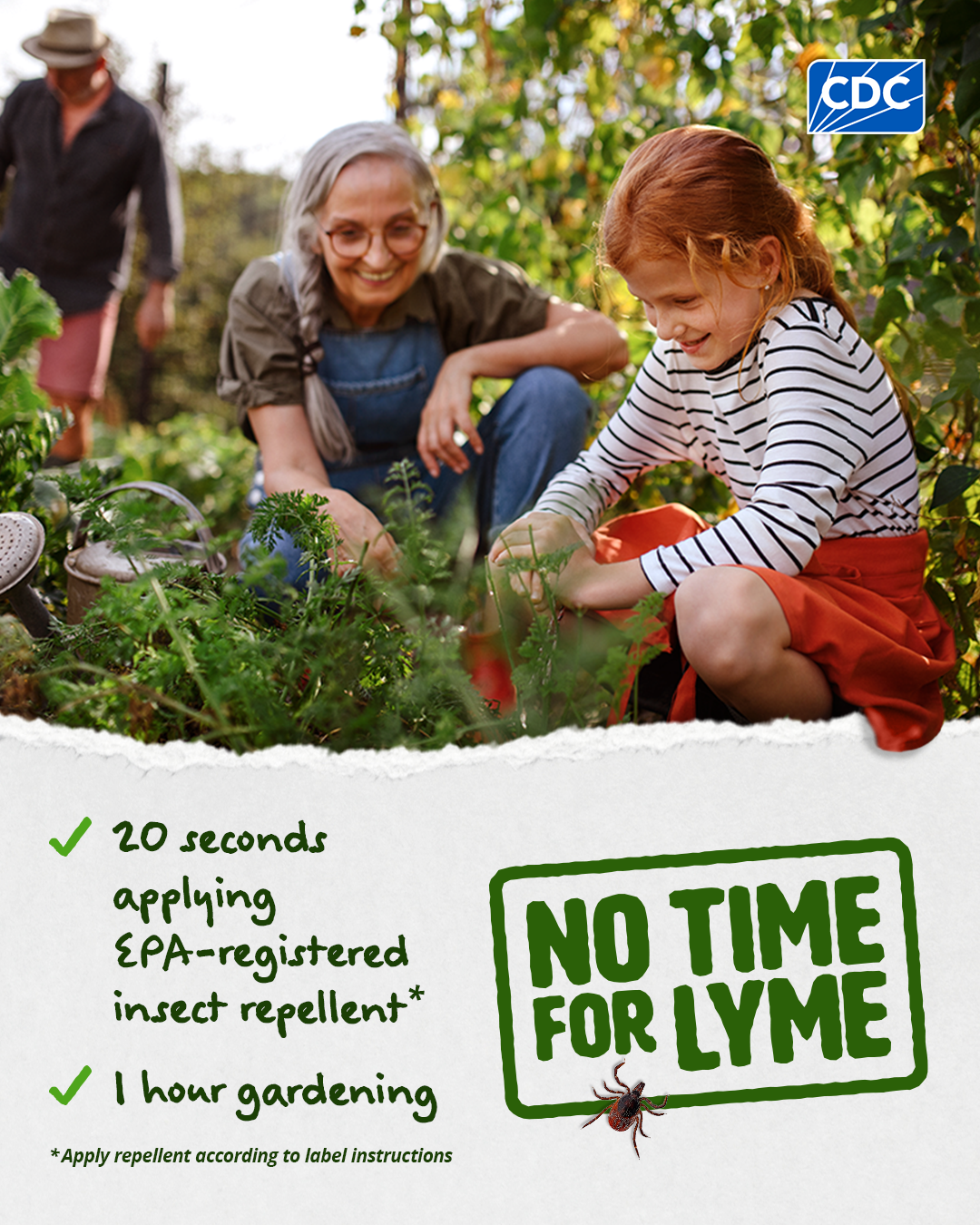
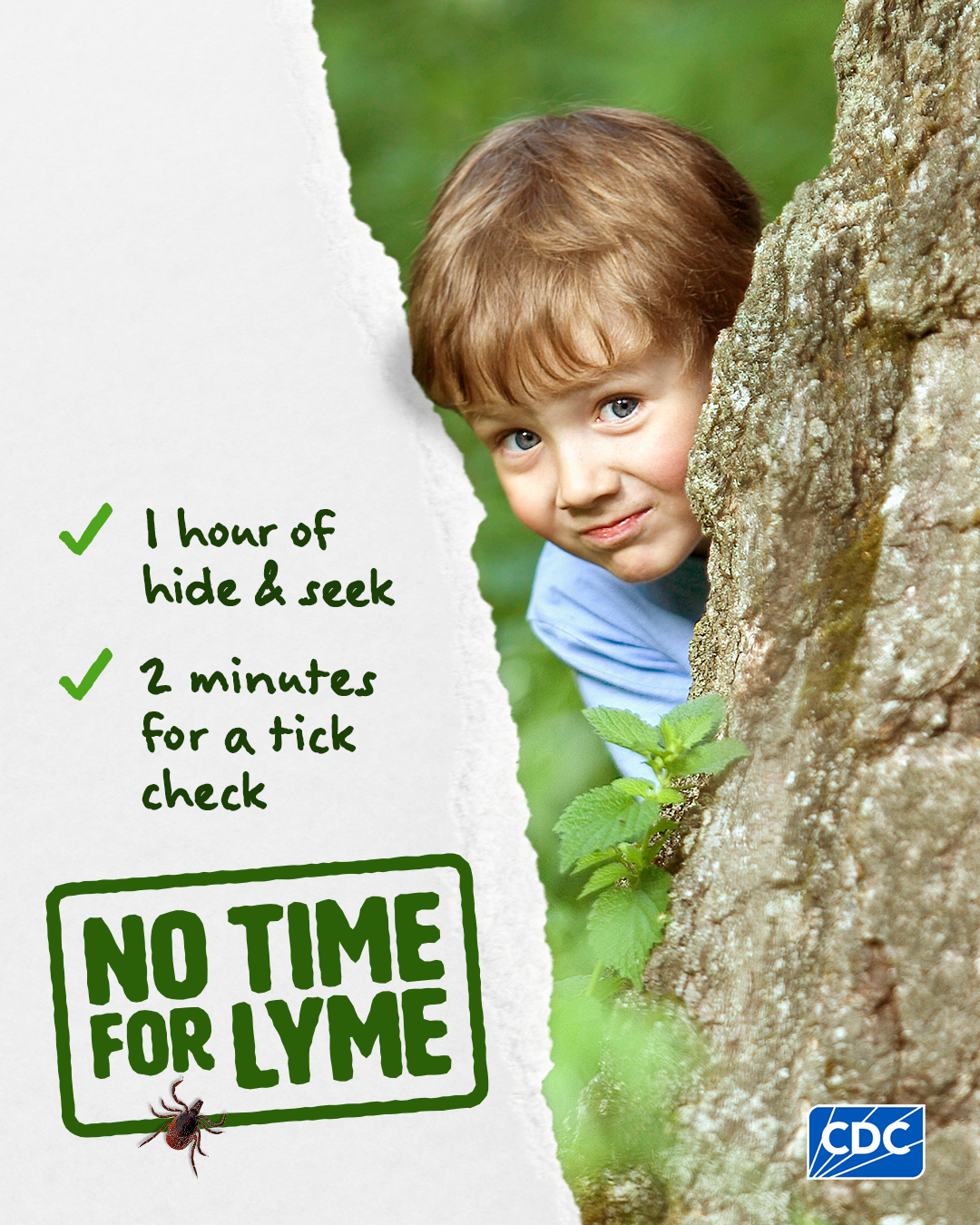
- New! No Time for Lyme visual assets to support your tick prevention outreach efforts.
- New! Webpage on preventing Lyme disease highlights the best way for the public to protect themselves from Lyme disease
- New! Tick removal photos in the Public Health Image Library. Type “DVBD” in the search box to find recently uploaded photos.
- New! CDC continuing education (CE) modules on AGS, Rocky Mountain spotted fever in the Southwestern United States, and malaria.
- Don’t forget to explore all of CDC’s CE for tickborne diseases, along with CDC’s West Nile Virus Clinician Training.
- New! Fact sheet on how to remove a tick. This one-pager is designed for healthcare providers to share with patients who seek care from a clinician to remove an attached tick.
- New! Alpha-gal syndrome fact sheet for healthcare providers to help support patients with the disease
- New! Insecticide resistance and efficacy testing resources. The new web content covers Topical Application Assays and Field Cage Trials, in addition to the CDC Bottle Bioassay.
- New! Animated video about adulticides, providing an educational overview of insecticides with a focus on community-level use of adulticides.
- New! Brochure and poster about the increased risk of severe arboviral disease for people who are immunocompromised. These resources are intended to be printed and placed in clinics or other venues where immunocompromised patients often visit. Aside from the clinical guidance webpage, a webpage for the general public is also available.
- Updated! You can request copies of CDC DVBD’s new alpha-gal syndrome (AGS) brochure for hunters by emailing [email protected]
In case you missed these resources from CDC!
- Testimonial videos sharing people’s experience living with alpha-gal syndrome and West Nile virus.
- Communications toolkit to support West Nile virus outbreaks, featuring key messages, sample products, and templates to communicate with the public
- More communication resources for ticks or for mosquitoes on CDC’s websites.
Coming soon from CDC
- West Nile virus communications strategy for state and local health departments based on case studies.
- Three new testimonial videos highlighting people’s experience with Powassan, dengue, and risk of severe arboviral disease for people who are immunocompromised.
- Additional Lyme disease materials, including an updated Lyme disease parent fact sheet and a new webpage with all the No Time for Lyme visual assets.
- Dengue clinical education CE module.