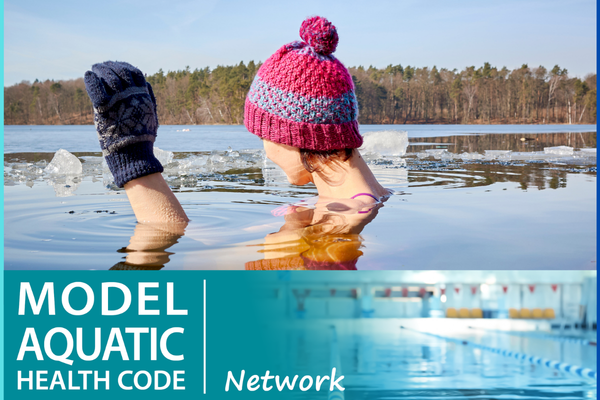
On March 31, 2026, NACCHO hosted a MAHC Network webinar focused on cold plunge pools and safety measures. This presentation featured guest speaker, Sarah Cheshire, an Environmental Health Scientist with the Utah Department of Health and Human Services. Sarah specializes in aquatic safety and regulatory development, and oversees the drafting of the Utah pool rule, ensuring state regulations keep pace with emerging aquatic technologies.
Presentation Overview
History of Cold Plunge Pools
Cold plunge practices can be traced as far back as ancient Egyptian, Greek, and Roman traditions. Later, these practices continued across Scandinavian, Baltic, Finnish, and Japanese traditions. The tradition of cold plunging has held both cultural and health-related significance across many cultures.
In the United States, from the 1800s through 1935, doctors began to use hydrotherapy, employing warm baths and cold-water plunges primarily as a means of patient control rather than to promote health. Today, many of the beliefs held around the benefits of cold plunging align more closely with the ancient practices and modern research.
Health and Safety Considerations
Cold plunging offers many physical and mental health benefits, but it also carries significant risks, particularly for individuals with underlying health conditions. The body’s immediate response to extreme cold can be dangerous, and prolonged exposure can lead to severe medical conditions, including cold shock, hypothermia, and cardiovascular stress. Due to these risks, individuals with underlying health conditions should avoid cold water immersion entirely or consult a healthcare professional before attempting it.
Mitigation of Health and Safety Risks and Operational Considerations
To mitigate and prevent biological contamination, facilities should have automated water systems to control pH and use chlorine disinfectants. It’s recommended that facilities also use a secondary disinfectant, such as UV, ozone, or advanced oxidation processes (AOP).
Testing the water quality and managing water balance are key steps in monitoring contamination. It is important to note that many water quality test kits are not calibrated for colder temperatures. To ensure an accurate test result, the water should be warmed to between 50 and 90 degrees Fahrenheit.
Utah’s Rule
Utah is one of the first states to establish regulations for cold plunge pools, which was published in January 2026. The rule requires cold plunge pools to meet standards similar to those for spa pools, including proper water recirculation. Facilities are also required to post signage with health warnings. This signage helps ensure that people who shouldn’t be using these pools are properly informed before they enter.
Interested in learning more? Take a look at the list of resources for more information on the content listed above.
NACCHO Webinar Resources
- Watch the webinar recording.
- Follow our YouTube channel.
- Get a copy of the webinar slides.
- See recorded responses from the webinar’s Q&A.
Utah’s Rule R392-302. Public Pool Design, Construction, and Operation:
- https://adminrules.utah.gov/public/rule/R392-302 (Section R392-302-38 is specific to cold plunge pools.)
Utah Code 26B-7-124 - Public Cold Bath exemptions.
Other Frequently Asked Questions, and public health guidance documents:
Considerations for environmental public health professionals:
The history of cold plunge swimming:
- Cold for centuries: a brief history of cryotherapies to improve health, injury and post-exercise recovery
- History Of Ice Baths: An Icy Plunge Through The Ages
The known health effects from cold plunging:
- The Benefits and Dangers of Cold Plunges
- What are the 4 stages of Cold Water Immersion?
- Cold Plunging and the Impact on Your Health | University of Utah Health
- You’re not a polar bear: The plunge into cold water comes with risks | American Heart Association
- Long-term risks of cardiac and cerebral vascular diseases increased following winter swimming in the cold seawater - International Journal of Cardiology
- ‘Autonomic conflict’: a different way to die during cold water immersion? - PMC
- Scientific Evidence-Based Effects of Hydrotherapy on Various Systems of the Body - PMC
- Health effects of voluntary exposure to cold water – a continuing subject of debate - PMC