Bridging Public Health and Environmental Health for Chemical Preparedness
May 15, 2025 | Nikita Kheni, Sarah Callahan
This page requires a membership login. Log in or create an account by clicking the link below.
MyNACCHO LoginChemical incidents pose immediate threats to public health and the environment. Environmental health professionals play a critical role during chemical incidents for ensuring the health of the affected populations and ecosystems. Collaboration between local health departments (LHDs) and environmental health professionals supports the response and recovery phases after a chemical incident.
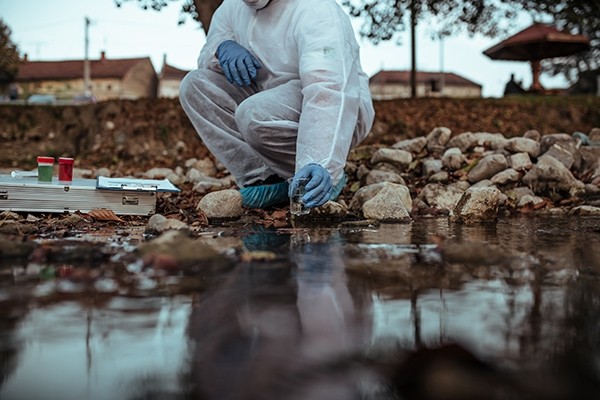
Environmental health professionals and other teams not housed within LHDs may have a variety of responsibilities such as:
Monitoring air, soil, and water before, during, and after an incident occurs.
Assessing and identifying chemicals involved in an incident.
Ensuring water systems are protected.
Setting up and inspecting shelters.
Supporting decontamination processes.
Environmental health professionals can assist LHDs in guiding emergency responders to make informed decisions regarding evacuation zones and protective measures. They can also assist in implementing emergency measures such as issuing boil water advisories, communicating risks and safety measures to the public, determining decontamination methods, and conducting environmental remediation activities after a chemical incident.
LHDs can build partnerships and engage in joint-training with environmental health professionals to support the response and recovery of the public and the environment. Tabletop exercises and regularly scheduled meetings for preparedness planning can help clarify responsibilities and allow partners to learn about each other’s protocols for data collection, environmental health monitoring, maintaining exposure databases, syndromic surveillance, and cross-communication. Creating channels of communication between environmental health inspectors, water utilities, epidemiologists, medical toxicologists, HAZMAT professionals, and first responders can enhance decision-making and coordination during a chemical incident.
Including environmental health activities in chemical preparedness plans, collaborating with environmental health professionals for joint trainings, and building partnerships with environmental health professionals can strengthen a response effort. Building upon these partnerships can help bridge together public health and environmental health to develop stronger support during response and recovery of a chemical incident.
Here is a brief checklist of environmental health response actions from NACCHO’s Chemical Preparedness Handbook:
Monitor air, soil, and water before, during, and after chemical incidents.
Conduct environmental sampling and real-time air monitoring.
Collaborate with environmental agencies for environmental impact assessments and cleanup efforts.
Ensure the safety of water systems through rapid detection and emergency measures. Coordinate hazardous materials and debris management with federal, state, and local agencies.
Implement decontamination procedures for affected individuals, equipment, and areas. Inspect shelters for environmental conditions and food safety.
Collaborate with agricultural agencies to protect agricultural resources and prevent contamination of food supplies.
For more information about chemical preparedness, action checklists, and more, download the Chemical Preparedness Handbook for Local Health Departments or visit NACCHO’s Chemical Preparedness page.
NACCHO is seeking constructive feedback on the Chemical Preparedness Handbook from LHDs. Click here to submit feedback.
Background
In 2024, in collaboration with the Agency for Toxic Substances and Disease Registry (ATSDR), the National Association of County and City Health Officials (NACCHO) developed a Chemical Preparedness Resource Library and a Chemical Preparedness Handbook for Local Health Department Preparedness and Response Plans to support local health departments chemical preparedness.
The Resource Library serves as a one-stop shop for local health departments to find evidence-based tools and resources for preparing for chemical emergencies.
The Chemical Preparedness Handbook supports local health departments in enhancing and/or developing their chemical preparedness plans by prompting thoughtful reflection and inquiry to identify key considerations and solutions before a chemical incident occurs.
Related Posts








Infection Prevention in Cooling Centers During Extreme Heat
A Heat Safety Week post from University of Arizona and Pima County Health...
May 20, 2026 | Royani Saha, University of Arizona, Mel and Enid Zuckerman College of Public Health, Betsy Camara, Pima County Health Department, Office of Heat Relief and Response, Nate Young, Pima County Health Department, Office of Heat Relief and Response, Mona Arora, University of Arizona, Mel and Enid Zuckerman College of Public Health