This month two Medical Reserve Corps (MRC) units share the strategies they are implementing to rebuild their units.
Stanislaus County MRC (CA)
When Austin Grant joined the Stanislaus County MRC in California as unit leader it had just 15-18 active members. A year later, the ranks have grown to about 200 active volunteers.
Grant’s first step to rebuilding was reaching out to past volunteers. The unit has also worked on recruiting with a focus on the local nursing school, junior college, and technical school including the dental and nursing programs. In thinking about growing the unit, Grant advises other unit leaders to use their community assessment tool to understand the demographics of those they serve as well as their needs.
“Since being reactivated, our unit has played an instrumental role in our community in a variety of ways,” said Grant.
The unit’s reactivation began with deployment late last summer in response to COVID-19 and back-to-school immunizations. A total of 30 volunteers were deployed thought the county in various roles including administrative support staff and vaccinator staff. Volunteers worked at multiple locations including Modesto City Schools District, Patterson Unified School District, and The Stanislaus County Veterans Center.
As he grows the volunteer base, Grant is also working to group the unit’s partnerships—expanding outreach to more school districts and community organizations.
“Since February, we have made several partnerships in our community including the institute of Technology in Modesto, The Modesto Farmers Market, City Ministry Network, Modesto City Schools District, and Keyes Unified School District,” said Grant. “We’re also working to build relationships with the sheriff and police department to provide volunteers for live simulation training.”
To keep volunteers engaged, the unit is planning several activities throughout the year, including conducting an in-person Narcan administration training, providing first aid at local events, and participating in elementary school career days and health seminars. The unit is also hosting two award ceremonies this year to recognize outstanding volunteers.
“Our goal to keep expanding the MRC so we can develop task forces in areas like vaccination and counseling,” said Grant. “We are looking to provide help to departments that may benefit from staffing support.”
As part of its $50,000 RISE Award grant, the Stanislaus County MRC is updating policies and procedures and its volunteer handbook. The unit is also working to incorporate Stop the Bleed into its activities as well as hosting additional Narcan administration trainings.
MRC of West Georgia
The MRC of West Georgia serves a diverse mix of rural, urban, and suburban communities across 12 counties. The unit had about 600 volunteers in recent years but as COVID declined, so did the number of volunteers. Now the unit includes less than 100 volunteers and is working to rebuild while being respectful of differences within its communities.
Volunteer Coordinator Aasta Wolfe started by dividing the communities into four regions and doing research into community make up to understand how to best serve and recruit from the community. This research included reviewing Census data and Wikipedia to get general information about each community. She then drove through the communities to get a sense of types of housing, to count how many churches and grocery stores are in the community, and to see how close the grocery stores are to where people are living. She did this with an eye of understanding, “if something devastating happens, where will people get food? What will be important to this community if something happens here—what’s the preparedness list for this community?”
Wolfe made cold calls to churches, hair salons, and barber shops to introduce the unit and get a feel for who would be interested in getting involved.
“Let them know you’re interested in learning about the community and how the MRC can be more responsive to the community’s needs,” advises Wolfe. “Let them know you want to make sure they’re represented in times of emergency.”
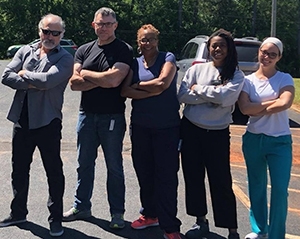
To ensure ongoing community input, the unit has reactivated its Advisory Committee.
“The role of advisory group is to make sure we don’t lose sight of our communities,” said Wolfe. “It’s an open and diverse group.”
The committee looks to include members from MRC state leadership, community leaders from each area served, the county nurse at each health department, the emergency preparedness director, and any type of emergency services in area.
Looking ahead, Wolfe will work to increase engagement with high schools and colleges. Trainings for volunteers will include radiation response, active shooter, opioid, tactical response, and first aid.