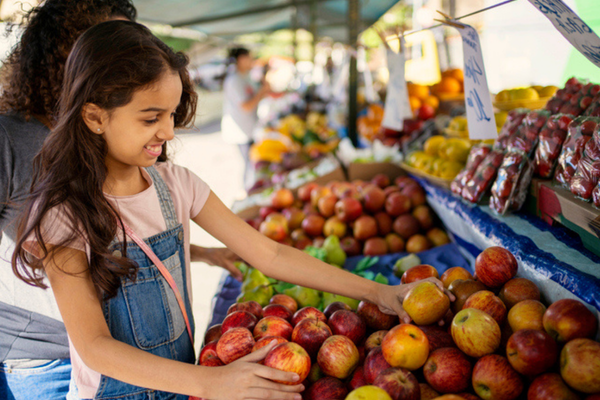
March was National Nutrition Month®, an annual campaign by the Academy of Nutrition and Dietetics that reminds us to reflect on how the foods we eat shape our health across the lifespan. This year’s theme, “Discover the Power of Nutrition,” was a powerful reminder that nutrition is not just about individual choices, but about access, systems, and opportunity.
At NACCHO, this message is deeply connected to our focus on the first 1,000 days, which is the period from pregnancy through a child’s second birthday. This window represents a critical period for establishing lifelong health and wellbeing, as proper nutrition is necessary for immune system development, physical and cognitive growth, and overall health. Unfortunately, many communities across the United States are faced with persistent barriers to nutritious foods, which can lead to harmful short- and long-term health outcomes for infants, toddlers, and families.
According to the U.S. Department of Agriculture, in 2024, nearly 19% of households with children were food insecure. This translates to approximately 7.3 million children that are at greater risk of infection, diabetes, obesity, cancers, and other chronic diseases during their lifespan.
Communities are responding with innovative, systems-level, and community-led solutions – and Durham County, North Carolina, offers a compelling example.
In a recent NACCHO podcast episode (at 6:05), Kelly Warnock, Nutrition Program Manager for the Durham County Department of Public Health in North Carolina, shares how their county has approached their local challenges to nutrition security. For nearly a decade, their local health department has recognized food access and nutrition security as a critical component of maternal and child health. With more than 1 in 6 families with children experiencing food insecurity, the County established an Office of Food Security to lead a coordinated, long-term response. Since its creation, the Office has embedded nutrition work across public health, schools, early childcare settings, and community partners.
One of Durham County’s flagship initiatives is the Double Bucks program. This is a farmers’ market nutrition incentive that matches SNAP benefits dollar-for-dollar. What began in 2014 as just a two-market partnership has expanded to a regional effort, spanning 3 counties and 7 markets. The program makes local, fresh food more affordable for the community while supporting farmers and the local economy. In just the past year alone, more than 1,000 households utilized Double Bucks to purchase nearly $400,000 in locally sourced, nutritious foods.
Durham County has also prioritized schools and early care and education (ECE) settings as critical access points. Through partnerships with Durham Public Schools, nutrition educators reach more than 30,000 students, many of whom were identified as food insecure. The team delivers hands on nutrition and cooking lessons aligned with state education standards and collaborates with school nutrition staff to implement policy and system changes. One major milestone has been reflected in the districtwide expansion of the Community Eligibility Program, which now ensures that students receive free breakfast and lunch.
Together, these strategies demonstrate what it looks like to “discover the power of nutrition” at the community level: not by addressing individual behaviors alone, but by transforming the systems that shape access and opportunity to make healthier choices.
NACCHO invites you to learn more about Durham County’s innovative approach in our podcast episode. Please click here to listen!
Resources
- Durham County Department of Public Health: Durham’s Innovative Nutrition Education (DINE) Program
- Durham Food Resources Map
- NACCHO: Infant and Toddler Nutrition Security E-Learning Course
- CDC: Early Childhood Nutrition Report 2025: Data to Support Healthy Growth and Development for Children 5 Years and Younger
- USDA: 2025-2030 Dietary Guidelines for Americans
- USDA: Household Food Security in the United States in 2024
- 1,000 Days Organization: #March4Nutrition Social Media Toolkit 2026
- Center on Budget and Policy Priorities: Nearly 2 Million Young Children in the U.S. Lived in Food-Insecure Households in 2023