Building Vaccine Trust in Portland, Maine: Improving Vaccine Communications with Vaccine Ambassadors
Jul 28, 2025 | Guest Author
This page requires a membership login. Log in or create an account by clicking the link below.
MyNACCHO LoginWritten by: Val Johnstone, Communications Specialist and Skylar Bergeron, Minority Health Promotion Specialist, Portland Public Health Division, Portland, Maine
Summary
Portland Public Health (PPH) successfully completed a project to refine its vaccine communication materials and develop new, tailored strategies to reach key populations in Portland, Maine. Working closely with Community Health Workers (CHWs), community-based organizations (CBOs), and faith-based leaders, PPH aimed to boost community trust and increase flu and COVID vaccination rates among Hispanic or Latinx and Black New Mainers1. As the project concludes, new, culturally tailored communication materials are ready for distribution, with a launch strategy underway for Immunization Awareness Month.
Gaps in Care and Trust
Disparities in healthcare access directly impact vaccination rates. Data from the CDC’s 2022 National Health Interview Survey revealed lower vaccination coverage among uninsured adults. Locally, PPH’s Health Equity Program reported that 52% of their Hispanic/Latinx CHW clients lacked a primary care provider in 2023, resulting in limited access to preventive care. Furthermore, data from the Maine Shared Community Health Needs Assessment (2012-2021) highlighted a notable gap in PPH’s populations of focus: only 35.9% of Hispanic adults and 33.9% of Black/African American adults reported getting a flu vaccine in the past year, compared to 43.8% of all Maine adults.
Participants in the project’s evaluations also expressed persistent vaccine hesitancy from the pandemic, with expressed concerns over the safety of vaccine ingredients, links between vaccines and autism, and distrust of Western medicine stemming from a long history of systemic racism in the medical field.
Our Path: Cultivating Community-Led Solutions
Despite offering no-cost vaccines, weekly walk-in appointments, and clinics with CBOs, PPH recognized a deeper need. For this project, staff used a community-first approach, engaging CHWs, faith-based leaders, and CBO representatives as “Vaccine Ambassadors.” These ambassadors, representing the target populations, gained vaccine insights from PPH’s Public Health Provider and openly discussed community concerns. They also recruited and participated in focus groups, ensuring new materials were truly tailored. These partners plan to share new materials and advocate for vaccinations within their trusted communities.
Three focus groups (Spanish, Portuguese, and French) were conducted to review previous outreach materials. Each group had the presence of native speakers or interpreters present. Participants, motivated by community care, emphasized several key findings: a strong preference for more images and less text, a need for simple, direct language highlighting the resource was no-cost, the importance of receiving health information from trusted community leaders, and continued mistrust regarding COVID-19 vaccines.
Tailored Outreach, Tangible Results
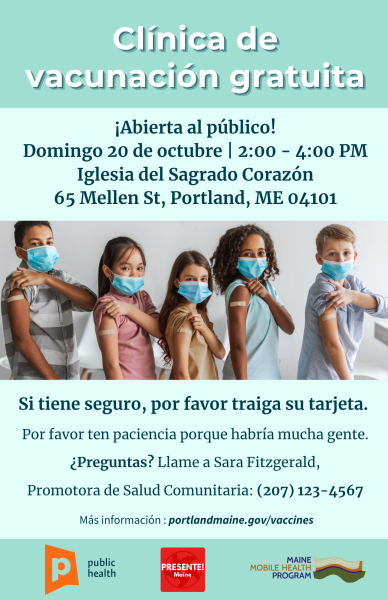
Following a thorough re-evaluation, PPH redesigned its flyers, translating them into Portland’s three most commonly spoken non-English languages. The new materials feature more images, less text, lower reading levels, accurate translations, and contact information for a known Community Health Worker. They also emphasize logos from established partner CBOs.
PPH will use new materials in a fall 2025 respiratory virus season campaign to promote upcoming community vaccine clinics, explain how to receive immunizations through the PPH Clinic, and provide evidence-based information on the safety of COVID & flu vaccines. To maximize reach, the design of these updated flyer templates will be adapted across multiple platforms, including bus ads, a print publication specifically for New Mainers, and social media posts.
Additionally, PPH plans to use feedback to create tailored materials for promotional videos and radio ads. PPH will continue partnering with local CBOs, faith groups, public school systems, and healthcare providers to reach diverse audiences. Staff will measure success by comparing 2025 COVID and flu vaccine administration numbers to 2024.
For more information on this project, contact Skylar Bergeron at [email protected]
New Mainers: Migrants, including asylum seekers and refugees, who have settled in Maine in recent years. These populations largely represent people from Angola, the Democratic Republic of the Congo, Central America, and South America.