How Farmworker Feedback Shaped Vaccine Materials in Santa Clara County
Jul 28, 2025 | Guest Author
This page requires a membership login. Log in or create an account by clicking the link below.
MyNACCHO Login
Written by: Gabi Avella, Associate Communications Officer at County of Santa Clara Public Health Department, California
With support from the National Association of County and City Health Officials, the County of Santa Clara Public Health Department focused their project on improving vaccine messaging among Latino agricultural workers who live in a smaller rural area that has some of the lowest respiratory vaccination rates in the county. This population also experiences more health disparities that make them more vulnerable to severe illness, and they live in overcrowded housing with lower access to consistent healthcare and public health messaging. They may also only speak Spanish or another Indigenous language. These factors make it harder to reach them with effective messaging.
This project began by strengthening relationships with two partners trusted among agricultural workers in the project area: Nueva Vida Community and Carry the Vision. These partnerships were key to receiving valuable feedback on materials and also led to an honest discussion where vaccine hesitancies and concerns were voiced in an open forum in the languages people were most comfortable speaking. Clear themes emerged during small group discussions led by people who live in the community:
A need for local and trusted community organizations to share health information
Barriers to care include fear of missing work, languages, vaccine misinformation, and issues with getting help from patient call lines
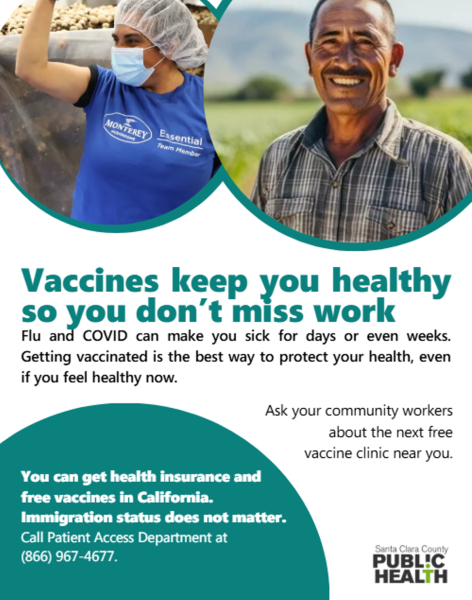
Wanting to see visuals of people on materials that accurately reflect real life, including clothing and work environments
The small groups explicitly stated what needed to change on the materials to make them more effective. Updates to materials included:
Benefits of vaccines, as well as the side effects
Accurate photos of agricultural workers
Specific wording used by people in the community
This project underscored the importance of designing communications not just for communities, but with them. As respiratory threats like H5N1 emerge, co-creating culturally grounded, equity-centered materials will become more critical.