Northeast Tri County Health District (NETCHD) is located in the northeast corner of Washington State. NETCHD functions as the Local Health Jurisdiction, providing public health services to Ferry, Stevens, and Pend Oreille counties. The Northeast Tri-County area has consistently been among the 10 lowest in childhood immunization rates of all the counties in Washington State for many years. Based on the 2025–2026 school immunization data, all three counties are in the bottom five of the 39 counties in Washington State for immunization completion rates.
Ferry, Stevens, and Pend Oreille counties are considered rural, and some areas are classified as frontier. These areas lack easy access to healthcare, with the closest clinic or pharmacy often being an hour or more away. If there is a small local clinic, it operates on very limited hours. Medical clinics often have a waiting list of three months or more for new patients or routine care like physicals. There are no urgent care centers, and ERs are limited in what they can treat, sending most, if not all, pediatric cases to the Spokane area, which ranges from one to three hours of driving time. There is limited public transportation in all three counties, so most people rely on cars. Gas is more expensive than in metropolitan counties. Many parents work multiple jobs, making it difficult to access providers during working hours.
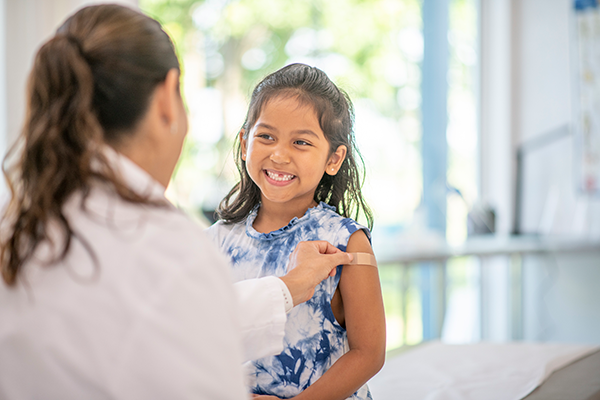
The School-Based Immunization Liaison Program was developed to help address these barriers parents are facing in our rural areas. Through the Liaison Program, MOUs are set up with school districts to allow vaccination on school grounds. Local school nurses sign up as volunteers for NETCHD to administer childhood immunizations to students at their schools with parental consent. As volunteers with NETCHD, school nurses can vaccinate under NETCHD’s standing orders and under NETCHD’s Health Officer’s license. NETCHD also has a part-time ARNP who can assist at schools whose nurses do not opt in to be volunteers. For this liaison model to work, NETCHD became a Childhood Vaccine Provider and houses the vaccines needed for school requirements, along with the supplies needed for administering vaccines. NETCHD shoulders the administrative tasks of administering vaccines, including documentation of the vaccine provided, and provides the vaccine and supplies to the school nurse to make the vaccination process as simple as possible.
Generally, school nurses contact the Immunization Coordinator when there is a need, such as a new student transferring in who is behind on vaccines, or they set up a date with the Immunization Coordinator to host a pop-up clinic at the school. For a pop-up clinic, flyers are created and distributed to families, and school nurses and secretaries work together to schedule students who are due or past due for their immunizations. NETCHD delivers the vaccine and supplies on the day of the clinic and provides administrative support.
For times when only one or two students have a need, the school nurse will often pick up and drop off the vaccine and supplies from the NETCHD office; administrative support is provided by NETCHD after the vaccine has been administered. Being able to go into the schools breaks down barriers for families and can be much less intimidating than a clinic visit.
In 2023, three schools enrolled in the liaison program to administer immunizations, and three schools enrolled to allow NETCHD to vaccinate at the school. In 2024, one school expired, a new school enrolled, and a local tribal Head Start enrolled to allow NETCHD to vaccinate at the school. Additionally, two partnerships were established with Eastern Washington University (EWU) School of Nursing and Washington State University (WSU) Range Health to provide vaccines at local events, such as back-to-school events, where their students and professionals can administer them.
The program grew greatly from the 2023–2024 school year to the 2024–2025 school year. In 2023–2024, NETCHD participated in six back-to-school events that provided 30 immunizations, six springtime clinics that provided 28 immunizations, and weekly Thursday clinics that provided 15 childhood immunizations throughout the year. In 2024–2025, NETCHD participated in eight back-to-school events that provided 127 immunizations, six springtime clinics that provided 65 immunizations, weekly Thursday clinics that provided 39 childhood immunizations throughout the year, and school nurse liaisons provided 10 immunizations outside of clinic events.
During the 2025–2026 school year, two additional school districts signed on, bringing the number of participating school districts to eight. NETCHD also expanded vaccine offerings to provide school staff with flu and MMR shots. NETCHD participated in 10 back-to-school events that provided 61 childhood immunizations. A combination of 13 school clinics and regular NETCHD clinics provided 70 childhood immunizations and 106 school staff immunizations.
School nurses have been instrumental partners in the success of NETCHD’s School-Based Immunization Liaison Program. If there was hesitation on the part of the school board or school superintendent, the school nurse was often the biggest champion in explaining the need and how this program breaks down barriers for families and can be used to support homeless teens. Bringing vaccines into the schools improves vaccination rates, creates trust between schools, public health, and families, and helps schools meet Washington State requirements for school immunizations.
If other health departments want to start a similar program but have not handled vaccines before, there will be a large lift to get this kind of program off the ground. NETCHD was already set up as an adult vaccine provider and travel vaccine provider and had the refrigeration units to store vaccines. Due to COVID funding, NETCHD also already had the necessary supplies to perform off-site clinics, such as qualified vaccine pack-out coolers and temperature monitoring data loggers. NETCHD also set up a new EHR system to document vaccine administration and bill insurance.
Next steps for the program include expanding to more school districts and continuing to provide consistent support and act as a trusted resource to local school districts and nurses.