NACCHO released a new report covering Cohort 4 of our Wastewater Monitoring Mentorship Program.
Wastewater monitoring (WWM) is a public health tool used to monitor community health and detect emerging threats. When used with other disease monitoring systems, it can paint a comprehensive picture of community-level infections and help inform public health action. The COVID-19 pandemic led to the widespread development and expansion of WWM across the United States. Today, local health departments (LHDs), state health departments, academic institutions, and private organizations use WWM to monitor pathogens such as SARS-CoV-2, Influenza A and B, Respiratory syncytial virus, and more.
In 2022, NACCHO, with support for the Centers for Disease Control and Prevention (CDC) launched the Wastewater Monitoring Mentorship Program to match LHDs with demonstrated experience using WWM with LHDs in the early stages of developing or expanding a WWM program.
During the program, mentors and mentees worked towards their individual project goals and participated in the following activities:
- Monthly technical assistance calls
- Individual mentor-mentee calls
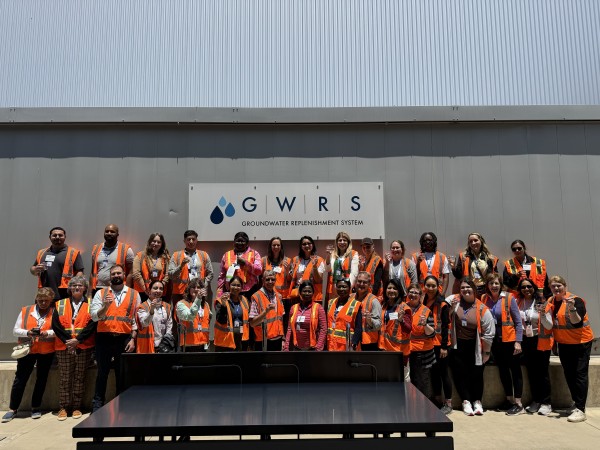
- Site visits to mentors’ jurisdictions
- Sharing of tools, resources, and lessons learned
- Networking through peer-to-peer sharing
- Connecting with subject-matter experts
The 2025 cohort was the fourth cohort of the program and featured five mentors and 11 mentees. Each mentor supported two to three mentees. For this cohort, the mentorship program prioritized serving rural health departments, recognizing the barriers that rural communities may face in implementing WWM programs.
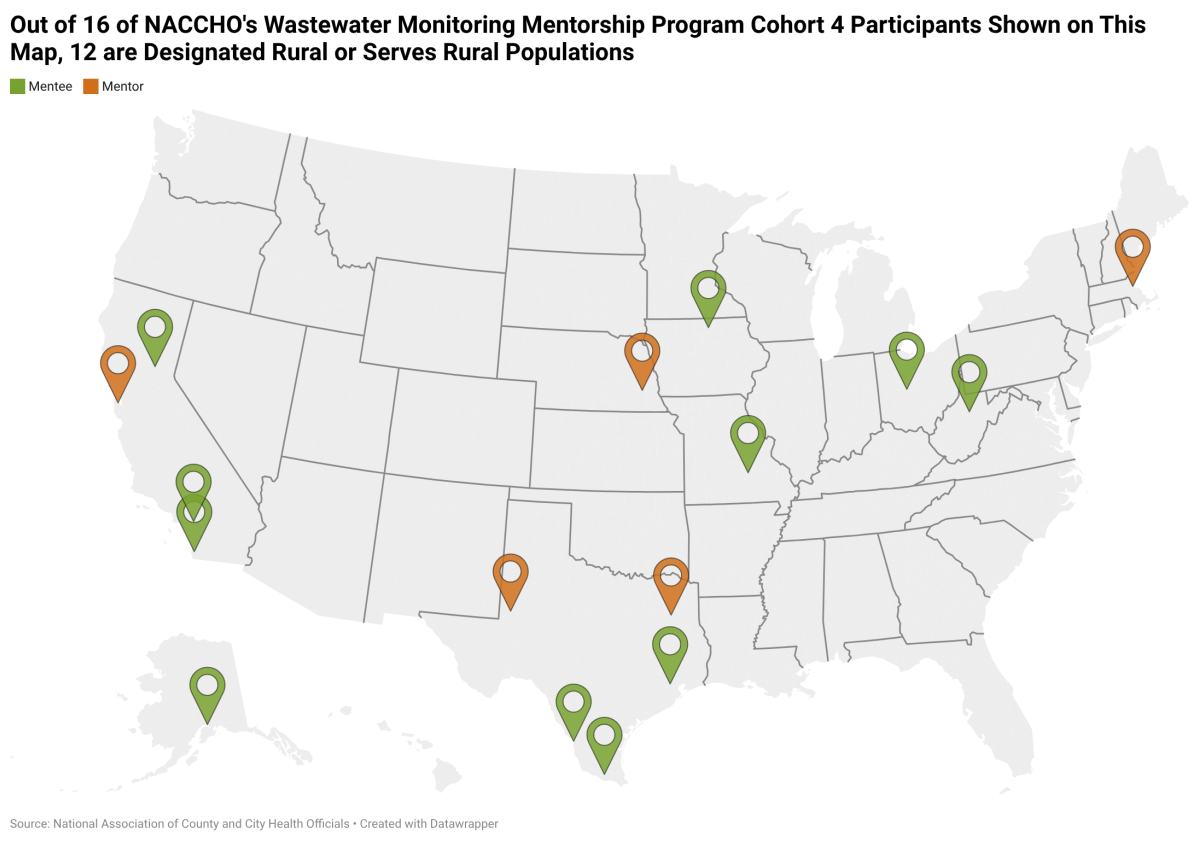
This illustration of the map of the United States shows how out of 16 of NACCHO’s wastewater monitoring mentorship program cohort 4 participants shown on this map, 12 are designated rural or serves rural populations.
At the end of the program, mentees reported:
- Increased partnerships with wastewater monitoring partners such as federal and state health agencies and wastewater utilities.
- Increased capacity across key wastewater monitoring objectives, including data utilization for decision-making, laboratory testing and analysis, wastewater sampling, and mapping/GIS.
- Enhanced local capacity to implement and/or strengthen wastewater monitoring. Participants reported plans to apply lessons learned in their future work.
- Hands-on learning through site visits to their mentor’s jurisdiction. Seeing WWM activities in person was critical to bringing back lessons to their own jurisdictions.
Read the new report to learn more about the mentorship participants, their achievements, and reflections from the program.
Getting Started with Wastewater Monitoring: A Checklist
If your jurisdiction is new to WWM and looking for guidance on how to develop or expand a program, check out a new resource from NACCHO: Getting Started with Wastewater Monitoring: A Checklist for Local Health Departments. This checklist, developed based on input from the mentorship program, provides practical guidance for getting started with WWM and identifying the resources you need for success.
Visit naccho.org/wash to explore a variety of wastewater monitoring resources, including a resource library, Community of Practice, and reports from past cohorts of the mentorship program.